Monday, July 17, 2006

El Capítulo 27 y Chapter 27


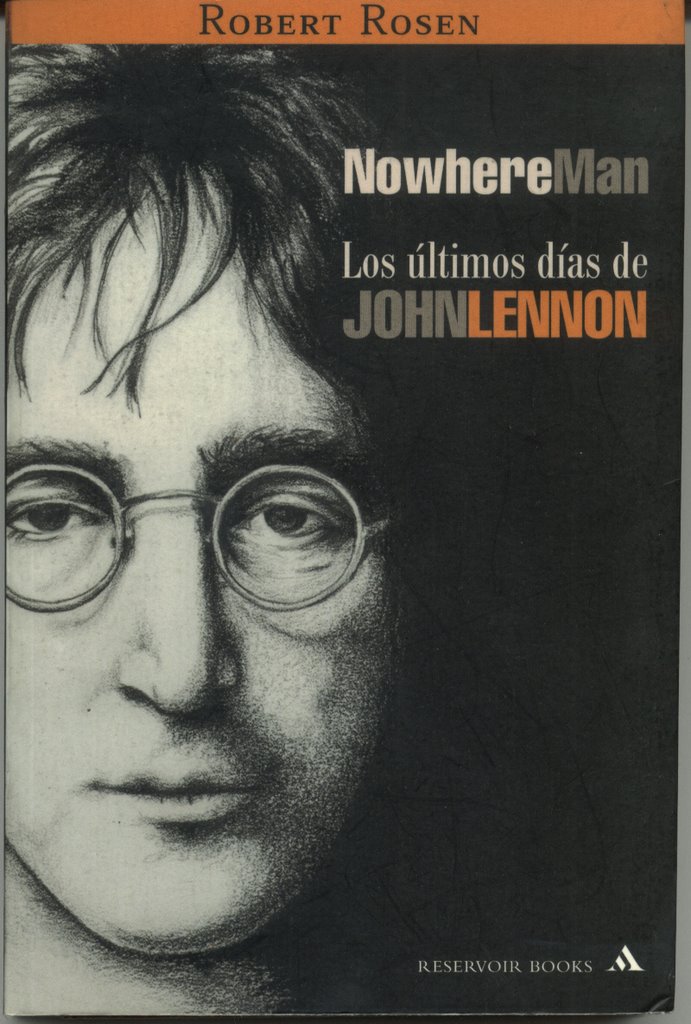
Para celebrar ambos, que cumplo 54 años (¡5+4=9!) el ¡27! de julio (2+7=9) y el 30 aniversario del día cuando el gobierno le concedió el permiso de Residencia a John Lennon, he puesto el “El Capítulo 27” de Nowhere Man: Los Ultimos Días de John Lennon. Esta es una forma de decirle gracias a quienes compraron Nowhere Man y quienes escribieron sobre el libro, convirtiéndolo en el éxito que es en Latinoamérica y España. Y quiero agradecer especialmente a todas las personas de México y Chile, que me dieron la bienvenida a sus países dispensándome su fina hospitalidad. Gracias, muchas gracias, de todo corazón.

***

El Capítulo 27


El 24 de agosto de 1981 fue un día sofocante—un día parecido a los de Honolulú—; cerca de doscientos miembros de la prensa y un puñado de espectadores esperan a que el famoso asesino sea conducido ante la Corte Suprema del estado de Nueva York, en el centro de Manhattan, y condenado por el delito de asesinato en segundo grado. La sala de la corte está abarrotada, y el nivel de energía es anticipadamente alto, con ese habitual tipo de anticipación previo a un concierto de rock. Todos estiran sus cuellos para ver con claridad a la estrella esposada, cuando entra en la sala con un chaleco antibalas debajo de una camisa azul oscuro. Chapman luce triste y patético, una presa entre las garras de algo que apenas entiende. Aunque no haya ya ninguna necesidad de juicio, hay la necesidad primaria de la humillación pública, un linchamiento verbal ante los medios de todo el mundo. Todos saben por qué Mark David Chapman lo hizo. Lo han sabido por ocho meses. Él lo hizo por la fama.

Y hay ciertamente mucha fama en los arrebatos de la sala de la corte esa día. Sería injusto sugerir que todos allí—todos los periodistas, testigos oculares, abogados—tienen el mismo objetivo: ser famoso. El juez Dennis Edwards, por ejemplo, parece bastante benigno, un viejo amable, de conducta moderada. En verdad, parece casi aburrido con lo que sucede, y tan soñoliento bajo la pesada humedad de agosto, que dormita por unos instantes en el banco, pero nadie parece advertirlo, u ocuparse de ello. Y el abogado defensor, Johnathan Marks, se conduce con aire de dignidad. Parece estar interesado en que su cliente tenga una audiencia imparcial.

Pero parece haber sólo una diferencia entre Chapman y virtualmente todas las demás personas que participan en esta audiencia: el acusado tiene ideas mucho más radicales acerca de cuán lejos está dispuesto a llegar para alcanzar la celebridad. Por un instante grotesco, Chapman, un cobarde perdedor, una cáscara vacía como ser humano, procura dominarse, es una actuación con el coraje de sus monstruosas convicciones. Él ha hecho exactamente lo que quería hacer, se ha transformado a sí mismo en el antihéroe mundial más famoso.

Por consiguiente, el aire está caldeado por celos vengativos. La gente está furiosa con Chapman no sólo porque él mató a John Lennon, sino también porque cometió un ataque brutal contra el statu quo, un acto de lucha de clases. John Lennon era un profesional muy exitoso, un miembro de la élite de poder. Y los profesionales más exitosos de la sala de la corte toman eso personalmente. Chapman se ha robado la fama de John Lennon, y ellos no están dispuestos a que la disfrute. Pero el triste hecho es que, de todas formas, la breve fama que ellos puedan alcanzar por esos días dependerá directamente de su relación con el asesino. Yo lo psicoanalicé a él. Yo lo acusé a él. Yo escribí una historia sobre él.

Los testigos oculares se han preparado bien para su momento ante los reflectores, para esa combinación de lo personal con lo histórico. Los psiquiatras podrían ser tomados por actores que audicionan para una miniserie de TV. Si puede hallarse un defecto en su actuación, es porque son transparentes en su mayoría. Sonríen demasiado. Parecen demasiado felices, demasiado presumidos, como si no les competiera cualquier noción anticuada de justicia, sino su lugar, pensar en contratos para escribir libros.

Los psiquiatras de la fiscalía repiten lo que han estado diciendo desde diciembre: Chapman estaba cuerdo, él sabía perfectamente lo que estaba haciendo, y lo hizo por la fama. Los psiquiatras de la defensa, desde luego, hablan de su esquizofrenia, de “la gente pequeña”, de su dolor.

Aparentemente, nadie se familiariza con la intrigante declaración de Yoko Ono sobre la reencarnación: “Tu hermano es la persona que tú asesinaste en tu vida pasada”. Por tanto, nadie se ha molestado en preguntar a Chapman: ¿Usted espera ser el hermano de John Lennon en su siguiente vida?

Los fans de Lennon añaden un toque surrealista a los procesos. Muchos de ellos llevan el pelo largo, como John lo usaba en el 68. Llevan lentes con bordes de cable y playeras con la imagen de Lennon. Ellos son más que los reporteros al menos en una relación de dos a uno, y están ansiosos por compartir sus opiniones con “los hombres de la prensa”.

“Mark David Chapman—opina un fan—era sólo un cabrón cobarde que lo hizo la fama.”

“Ahora él merece morir—añade otro—. Y yo estaría feliz de bajar el enchufe.”

Allen Sullivan, el fiscal, describe a Chapman como un hombre que “nunca mostró algún verdadero remordimiento” y está “interesado sólo en sí mismo, en su propio bienestar, en lo que le afecta, lo que le importa en este preciso momento”. Entonces insiste en que Chapman “lo hizo por la fama, por la exaltación personal, para llamar la atención sobre él, para halagar a su propio ego. El acusado estaba dedicado todo el tiempo a hacerse famoso”. Su prueba: Chapman quería que el fotógrafo Paul Goresh, quien previamente había fotografiado a Lennon cuando firmó la copia del Double Fantasy para Chapman, esperara hasta que Lennon regresara de su sesión de grabación, para que pudiera hacer la foto del asesinato.

Sullivan lo hace parecer como si el deseo por la fama fuera una cosa vergonzosa, un crimen en sí mismo. Pero sus palabras suenan huecas. Es un feo espectáculo que pasa por alto intencionalmente, el único hecho horrible que flota como una niebla sobre la sala de la corte. Es un hecho que nadie se atreve a mencionar: en Estados Unidos, en 1981, particularmente en una ciudad como Nueva York, la fama es una ventaja crucial, y el anonimato es una condición tóxica que puede conducir a la rabia asesina.

Holden Caulfield o John Lennon, en cuanto a eso, se habrían vomitado.

Antes de que el juez Dennis Edwards pronuncie la sentencia, a Chapman se le concede la oportunidad de hablar. Pero es poco lo que puede hacer para ayudarse a sí mismo. Chapman ya se ha declarado culpable. La evidencia en su contra es abrumadora. Es literalmente un arma humeante. El veredicto también podría estar predestinado. Él se ha enterrado en algún lugar por el resto de su vida. Alguna vez, la única duda verdadera era si él iba a estar en una prisión o en una institución para criminals dementes. Ahora no hay duda.

Visto como un mártir con un chaleco antibalas, se pone de pie y enfrenta al juez. Tiene su “Biblia” con él—su copia muchas veces hojeadas de El guardian entre el centeno—. “Yo he escogido este pasaje como mis últimas palabras”, jura—un juramento que pronto romperá—. Abre el capítulo 22, en el que Holden, tras ser expulsado de la escula por reprobar cuatro materias, dice a su pequeña hermana, Phoebe, lo que quiere hacer con su vida.

El asesino empieza a leer. “De todos modos, yo sigo imaginando a todos esos niños pequeños jugando algo en ese gran campo de centeno y eso es todo.” Está nervioso y al principio vacila. Entonces algo le da fluidez y pone empeño, su voz de repente es fuerte y clara, regular e impecable. Él ha ensayado bien, y hace justicia a Salinger.

“Miles de niños pequeños y nadie alrededor—nadie grande, quiero decir, excepto yo—. Y estoy parado al borde de un temible precipicio. Lo que tengo que hacer es capturar a todo el que empiece a acercarse al precipicio. Me refiero a que si ellos corren y no miran a donde van, yo tengo que salir de algún lugar y capturarlos. Eso es lo que yo hago todo el día. Yo sólo soy el guardián entre el centeno, y eso es todo.”

Éste es su mensaje y confesión. Mark David Chapman es el guardián entre el centeno de su generación; él ha asesinado a John Lennon para salvar a los niños.

Entonces Chapman dice a la callada sala de la corte: “Me siento como un peleador sangriento premiado en el round 27”. Ésas son las palabras exactas que había dicho a un psiquiatra en Hawai, tras su intento de suicidio. Pero nadie sabe de qué está hablando. Tampoco entienden el significado del 27, el triple de 9, ni el significado del capítulo 27, el capítulo perdido de El guardián entre el centeno, el capítulo de Chapman escrito con la sangre de Lennon. Son sólo unas palabras insensatas de un loco, que no significan nada.

El juez entonces pronuncia la sentencia y Chapman es sacado; con las esposas sale sin miedo de la sala de la corte, llevando la cabeza en alto, realmente brillando de orgullo. Él ha hecho lo que vino a hacer.

Instantes después, afuera de la sala de la corte, los medios, con sus bolígrafos, reflectores y cámaras listas, descienden sobre los testigos oculares de la fiscalía y Sullivan, el fiscal. Ellos son el equipo ganador. Están de pie en un nudo apretado y pequeño, arreglados para los reflectores, cada uno sonriendo ampliamente, empujándose el uno al otro hacia atrás, felicitándose interiormente por el trabajo bien hecho. Lo único que se echa de menos es el champagne, que probablemente vendrá más tarde, en una fiesta privada.

“¿Se hizo justicia?”, los medios quieren saber.

Por supuesto que se hizo justicia. El asesino muy probablemente pasará el resto de su vida en la cárcel.

Entonces no les queda nada más que hacer sino irse a casa y verse en las noticias nocturnas, mirarse fotografiados en los periódicos matutinos.

Con excepción de Mark David Chapman. Él continuará la gran caída descrita en la oscura profecía del capítulo 24 de El guardian entre el centeno. El Sr. Antolini, un viejo maestro de Holden—otro “pervertido” en realidad—, le dice: “Yo pienso que esta caída que estás conduciendo es una clase especial de caída, horrible. Al hombre que cae no se le permite sentir u oírse a sí mismo cuando toca fondo. Él sólo sigue cayendo y cayendo”.

Chapman pronto descubrirá lo que hay en el fondo del abismo “sin fondo”: un confinamiento solitario en Attica, poseído por los demonios.

Imagina que no hay posesión.

“Esto me mata.” Eso es lo que Holden Caulfield hubiera dicho, de todos modos.

Desde Nowhere Man: Los Últimos Días de John Lennon © 2003, Robert Rosen.
© 2003, de la traducción, Rene Portas
© 2003, Groupo Editorial Random House Mondadori, S.L.
Barcelona, España
© 2003, Editorial Grijalbo, S.A. de C.V.
México, D.F.

***

The Translation

To celebrate both my 54th birthday (5+4=9!) on July 27 (!) and the 30th anniversary of the government granting John Lennon his green card, I’ve posted “El Capítulo 27” from Nowhere Man: Los Últimos Días de John Lennon. This is my way of saying thank you to all the Spanish-speaking people who’ve bought Nowhere Man, who’ve written about the book, and who’ve made it such a success in Latin America and Spain. And I especially want to thank all the people in Mexico and Chile who welcomed me to their countries with such graciousness and hospitality. Thank you! Thank you! Thank you!

***

Chapter 27

On the stifling day of August 24, 1981–a Honolulu-like day–about two hundred members of the press and a handful of spectators wait for the famous assassin to be brought before the New York State Supreme Court in downtown Manhattan and sentenced for his crime of second-degree murder. The courtroom is packed, and the energy level is high with anticipation, the kind of anticipation that normally might precede a rock concert. Everybody cranes their necks to get a good look at the manacled star as he is marched into the room wearing a bulletproof vest under a dark blue shirt. He looks sad and pathetic, a pawn in the clutches of something he barely understands. Though there is no longer any need for a trial, there is a primal need for a public shaming, a verbal tarring and feathering before the world media. Everybody knows why Mark David Chapman did it. They’ve known it for eight months. He did it for fame.

And there’s certainly a lot of fame up for grabs in the courtroom this day. It would be unfair to suggest that everyone there–all the journalists, expert witnesses, lawyers–has the same objective: to be famous. The judge, Dennis Edwards, for example, appears to be utterly benign, a kindly old man, low-key in his demeanor. Indeed, he seems almost bored by what is happening, and so drowsy from the heavy August humidity that he dozes off for a few moments at the bench, but nobody seems to notice, or care. And the defense attorney, Jonathan Marks, carries himself with an air of dignity. He does seem to be concerned that his client be given a fair hearing.

But there appears to be only one difference between Chapman and virtually everybody else who is participating in this hearing: The defendant has far more radical ideas about how far he’s willing to go to achieve celebrity. For one grotesque moment, Chapman, a cowardly loser, an empty shell of a human being, managed to manipulate himself into acting with the courage of his monstrous convictions. He has done exactly what he wanted to do; he has transformed himself into the world’s most famous antihero.

Consequently, the air is thick with vengeful jealousy. People are furious at Chapman not only because he killed John Lennon, but also because he committed a brutal attack on the status quo, an act of class warfare. John Lennon was a very successful professional, a member of the power elite. And the very successful professionals in this courtroom take it personally. Chapman has stolen John Lennon’s fame, and they’re not about to let him enjoy it. But the sad fact is that whatever fleeting fame they might be able to grasp this day will depend strictly upon their relationship to the killer. I psychoanalyzed him. I prosecuted him. I wrote a story about him.

The expert witnesses have prepared well for their moment in the spotlight, for this merging of the personal and historical. The psychiatrists could be mistaken for actors auditioning for a TV miniseries. If there is fault to be found in their performances, it’s that most of them are transparent. They smile too much. They look too happy, too smug, as though they aren’t concerned with any antiquated notions of justice, but are thinking instead about book deals.

The psychiatrists for the prosecution repeat what they’ve been saying since December: Chapman was sane, he knew exactly what he was doing, and he did it for fame. The defense psychiatrists, of course, talk of his schizophrenia, the “Little People,” his pain.

Apparently, nobody on either side is familiar with Yoko Ono’s intriguing statement on reincarnation: “Your brother is the person you murdered in your past life.” So nobody has bothered to ask Chapman, Do you expect to be John Lennon's brother in your next life?

The Lennon fans add a surreal touch to the proceedings. Many of them are long-haired in that “John ’68” style. They wear wire-rimmed glasses and T-shirts with Lennon’s image on it. They’re outnumbered by reporters by at least two to one, and they’re anxious to share their opinions with “the men of the press.”

“Mark David Chapman,” opines one fan, “was just a cowardly fuck who did it for fame.”

“Now he deserves to die,” adds another. “And I’d be happy to pull the switch.”

Allen Sullivan, the prosecutor, describes Chapman as a man who “has never exhibited any true remorse” and who is “only interested in himself, his own well-being, what affects him, what’s important to him at this particular moment.” He then proceeds to hammer home the point that Chapman “did it for fame, personal aggrandizement, to draw attention to himself, to massage his own ego. The defendant was concerned throughout that he become famous.” His proof: Chapman wanted photographer Paul Goresh, who’d previously photographed Lennon signing Chapman’s copy of Double Fantasy, to wait until Lennon returned from his recording session so he could get a photo of the murder.

Sullivan makes it sound as if the desire for fame is a shameful thing, a crime in itself. But his words ring hollow. It’s an ugly show that intentionally overlooks the one hideous fact that hangs like fog in the courtroom. It is the one fact that nobody dares mention: In America in 1981, particularly in a city like New York, fame is a crucial commodity, and anonymity is a toxic condition that can lead to murderous rage.

Holden Caulfield, or John Lennon for that matter, would have puked.

Before Judge Dennis Edwards passes sentence, Chapman is given the opportunity to speak. But there’s little he can do to help himself. Chapman has already pleaded guilty. The evidence against him is overwhelming. There is literally a smoking gun. The verdict may as well have been preordained. He is getting locked up somewhere for the rest of his life. Once, the only real question was if it was going to be in prison or in an institution for the criminally insane. Now there is no question.

Looking like a martyr in a bulletproof vest, he stands up and faces the judge. He has his “Bible” with him–his well-thumbed copy of The Catcher in the Rye. “I’ve chosen this passage as my final spoken words,” he vows–a vow he'll soon break. He opens to Chapter 22, in which Holden, after being thrown out of school for failing four subjects, tells his little sister, Phoebe, what he wants to do with his life.

The murderer begins reading. “Anyway, I keep picturing all these little kids playing some game in this big field of rye and all.” He’s nervous and at first he falters. Then something clicks and he hits his stride, his voice suddenly strong and clear, smooth and flawless. He is well rehearsed, and he does Salinger justice.

“Thousands of little kids and nobody around–nobody big, I mean–except me. And, I’m standing on the edge of some scary cliff. What I have to do, I have to catch everybody if they start to go over the cliff–I mean if they’re running and they don’t look where they’re going I have to come out from somewhere and catch them. That’s all I’d do all day. I’d just be the catcher in the rye and all.”

This is his message and confession. Mark David Chapman is the Catcher in the Rye for his generation; he has murdered John Lennon to save the little children.

Then Chapman tells the hushed courtroom, “I feel like a bloodied prizefighter in the 27th round.” These are the exact words he said to a psychiatrist in Hawaii after his suicide attempt. But nobody knows what he’s talking about. They understand neither the significance of 27, the triple 9, nor the significance of Chapter 27, the missing chapter of The Catcher in the Rye, Chapman’s chapter written in Lennon’s blood. They are just the meaningless words of a madman, signifying nothing.

The judge then passes sentence, and Chapman is taken away still wearing manacles. He walks fearlessly out of the courtroom, holding his head high, veritably glowing with pride. He’s done what he came to do.

Afterwards, outside the courtroom, the media, with their pens and floodlights and cameras at the ready, descend upon the expert witnesses for the prosecution, and Sullivan, the prosecutor. They are the winning team. They stand in a tight little knot, preening in the floodlights, everybody smiling broadly, patting each other on the back, congratulating themselves on a job well done. The only thing missing is champagne, which will probably come later, at the private party.

“Was justice served?” the media demands to know.

Of course justice was served. The killer will most likely spend the rest of his life in jail.

Then there is nothing for them to do but go home and watch themselves on the evening news, look at their pictures in the morning newspapers.

Except for Mark David Chapman. He will continue the great fall described in the dark prophesy in Chapter 24 of The Catcher in the Rye. Mr. Antolini, an old teacher of Holden’s–another “pervert,” actually–tells him, “This fall I think you’re riding for–it’s a special kind of fall, a horrible kind. The man falling isn’t permitted to feel or hear himself hit bottom. He just keeps falling and falling.”

Chapman will soon discover what lies at the bottom of the “bottomless” pit: solitary confinement in Attica, possession by demons.

Imagine no possession.

“That kills me.”

That’s what Holden Caulfield would have said, anyway.

From Nowhere Man: The Final Days of John Lennon
Quick American Archives, 2002
© 2000, 2002 Robert Rosen

Friday, June 09, 2006

Why Don’t Those “Chapter 27” People Make a Film About John Lennon Instead of Mark David Chapman?

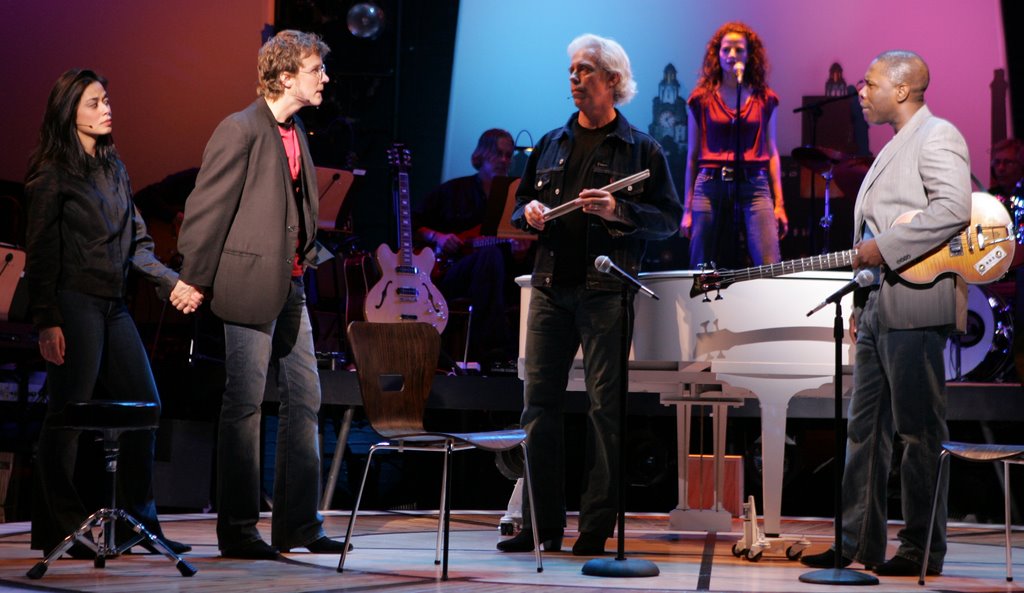
A scene from the disastrous Broadway musical Lennon, a Yoko Ono-authorized project that ran for a few weeks in the summer of 2005. © 2005 Joan Marcus

***

It’s a good question, one I’ve seen raised in numerous online forums, including IMDB. Since I seriously doubt the filmmakers will answer it before Chapter 27 is released next year (if they ever answer it), I’ll attempt to answer it myself. But before I do, I just want to say to Chapter 27’s writer/director J. P. Schaefer: Hey J. P., when you’re ready to talk, let’s do an interview for Proceso, the Mexican Time/Newsweek. In case you haven’t heard, the Mexicans think Mark David Chapman is a fascinating character—a grotesque symbol of the maddening juxtaposition of wealth/poverty/fame/anonymity/sanity/insanity in America. Yes, J. P., I think we could do quite the entrevista.

As for the question: I think that Chapter 27’s producers, Peace Arch Films, did want to make a movie about John Lennon; they probably spent a year or two trying to figure out how—only to realize that without Yoko Ono’s permission they couldn’t make the kind of “serious” film they wanted to make. Chapter 27, I suspect, is what they chose to do instead.

Other people, of course, have made unauthorized Lennon films, and some of them are quite good. The Hours and Times (1991), starring Ian Hart as Lennon, is about John’s alleged affair with the Beatles’ manager Brian Epstein. Backbeat (1994), again starring Hart as Lennon, is about the Beatles in Hamburg in the early 1960’s. The Two Of Us (2000), starring Jared Harris as Lennon and Aidan Quinn as Paul McCartney, is about a fictional reunion John and Paul had in New York in the mid-1970’s. But in each case the producers had to overcome seemingly insurmountable legal and creative obstacles: Because Ono controls both the rights to Lennon’s music and the screen rights to the registered trademark known as “John Lennon,” they couldn’t use music written by Lennon (or the Beatles), they couldn’t quote Lennon from published sources, and The Two Of Us, which took place during the Dakota years, couldn’t use Ono or Sean Lennon as characters.

And Ono still probably wanted to sue—because the only John Lennon story she wants told is her authorized “official” version. But Ono’s lawyers presumably told her in each case that a lawsuit was a bad idea. Not only would it bring more attention to these films, but it would be difficult, if not impossible, to prove that they were taking money out of her pocket or that a reasonable person might mistake them for authorized products of the Lennon estate, thereby infringing on her Lennon trademark. (Apple Records recently sued Apple Computer in British courts for this kind of trademark infringement…and lost.)

Chapter 27, however, is a different kind of movie because the subject matter is so “controversial” and because it’s getting so much high-profile publicity. When Ono’s attorneys found out about it, they probably sent Peace Arch a letter telling them (as if they didn’t know) that Ono controls the screen rights to her own character, to Lennon, and to Sean, and they probably asked to vet both the script and the film—just to make sure that Peace Arch hadn’t infringed upon any trademarks or copyrights.

In response, I’d imagine the Peace Arch attorneys told Ono’s lawyers to chill, assuring them that nothing had been infringed, and they’d do their own vetting, thank you very much. (I also suspect that Ono’s attorneys were not at all happy when they saw photos of the pseudo-Double Fantasy album cover, which could be mistaken for the real thing. They probably fired off another warning letter to Peace Arch, and it remains to be seen if the album stays in the picture.)

Well, this is all very interesting, people may say. But then they often ask: Why doesn’t Ono just give her approval to a great filmmaker, like Martin Scorsese or Robert Altman, and let him make the Lennon movie everybody wants to see—one with proper music, characters, and dialogue?

The answer is simple: Independent-minded directors of Scorsese’s or Altman’s stature would never collaborate with somebody who, like Ono, would demand complete control of the film and final approval over everything associated with it. When Ono gives permission for a Lennon project, it’s not to artists and auteurs; it’s to pliant journeymen she can bend to her will—like Don Scardino, for example, the “conceiver”/director/writer of the Broadway musical Lennon, which ran for a few weeks in the summer of 2005 and met with uniformly disastrous reviews before closing.

In a lengthy critique of Lennon I wrote for Proceso (available en español as an e-document on Amazon, or for a few pesos less from Proceso), I said that the primary problem with the play was that it never took you into John’s world; you never believed for a second that what you were seeing onstage was an accurate representation of his life; and that Lennon himself never came alive—partly because nine different actors, men and women of various ages and ethnic backgrounds, took turns playing him, with one serving as the “main” narrating Lennon. (Ono has said that no single actor is capable of playing Lennon.)

In the article, I also contrasted Scardino’s experience putting together Lennon with my own experience, in 1981, collaborating with Lennon’s former personal assistant, Fred Seaman, on what was supposed to be an authorized Lennon biography based on John’s diaries—a project that 19 years later became the very unauthorized Nowhere Man. I think the following excerpts will help explain why Peace Arch chose to make Chapter 27 rather than a Lennon biopic:

Scardino, [probably best known for directing a few episodes of Law and Order and the Cosby show], has said that he didn’t want Lennon to be a “whitewash” but was uneasy about including any material that portrayed John in a negative light. He’s also said that Ono insisted that he keep a scene where John humiliates her at a party, loudly making love to a girl in the next room. Though the scene does remain, it’s neutered. There’d be no way to know what was going on if “narrating John” didn’t tell you.

Which raises a ticklish question: Is everybody who collaborates with Yoko Ono on any Lennon project reduced to being a propagandist? I’m not sure. But I can say this much: Every day [as I struggled to put together the authorized Lennon bio], Seaman and I confronted the same two questions: Is there anything we can write that Ono will approve? Is there any way to please “Mother”? The problem was that every time Seaman spoke to Ono, he divined different answers.

“Write something that makes Yoko look like a star in her own right…and write it fast,” he’d tell me Monday. Then Tuesday he’d say, “Don’t use any words at all; it has to be a picture book.”

Our discussions left me creatively paralyzed, and I suspect that it was a similar kind of fear and confusion that drove Scardino to rely completely on Lennon’s previously published words, to write virtually no original material, and to reduce John’s last five years to little more than the official myth: “I was taking care of the baby.”

At the least, Ono should have insisted that Scardino show Lennon’s dramatic struggle in Bermuda, in the spring and summer of 1980, to write the music for his final album, Double Fantasy—show a creative giant awakening from a five-year slumber to recapture his muse. Instead, for reasons I do not pretend to understand, it was airbrushed out—along with his mistress, May Pang, his son Julian, tarot, magic, astrology, numerology, servants, money, marijuana, and his diary.

***

Assuming the copyright laws (which Congress, pressured by well-funded Disney lobbyists, recently revised to keep Mickey Mouse out of the public domain), aren’t changed yet again, John Lennon and his creative output will begin to pass into the public domain in 2055. Until then, all we can do is take what we get and hope for the best. Chapter 27 is hardly the last word. There are a lot of independent-minded and fiercely creative people who will not rest until they find innovative and “legal” ways to tell the John Lennon story that they want to tell, that John would have wanted told, and that deserves to be told in our lifetime.

Monday, May 15, 2006

All He Was Saying Was “Give Me a Job!”

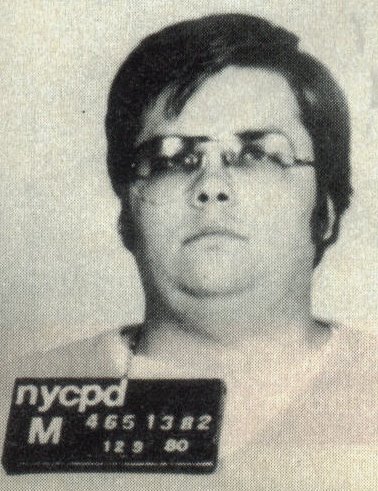
Mark David Chapman’s mug shot, from December 9, 1980.

***

Late in the afternoon of December 8, 1980, Mark David Chapman confronted John Lennon as the ex-Beatle emerged from the Dakota. But instead of shooting Lennon, he handed him a copy of Double Fantasy. Yet even more than Lennon’s autograph, Chapman wanted a job. Because he’d read in Lennon’s Playboy interview that sometimes he hired fans off the street.

Here’s how I describe the scene in Nowhere Man:

In his deranged mind [Chapman] figures that he might like to work in the Dakota, and if John hires him, there’ll be no need to kill him.

“Is this what you want?” John asks, scrawling his name and the date on the [album] cover.

Mister Lennon, are there any jobs available in your office? It is a triumph of will [for Chapman] to get the words out.

Paul Goresh, an amateur photographer who haunts the Dakota, snaps a picture—24 hours later it will be on the front page of The Daily News.

“Send in your resume,” John suggests to Chapman. He then climbs into the limousine, which speeds off towards Columbus Avenue.

An excerpt from Nowhere Man (en español) about what it was like to work for John Lennon just ran in Soho, a popular Colombian “lad” magazine (kind of like Maxim). It reminded me of this passage, so I figured I’d post a link to the article. (The original English is, of course, accessible through Amazon’s “Search Inside” feature, though it’s easier to just buy the book.)

While I’m at it, two other Nowhere-Man-related items—an interview in Paniko and a news article about Paniko in the Chilean newspaper La Nación—have recently been published. Para los lectores que hablan español, aquí están los enlaces:

Las drogas de Lennon

Periodismo adolescente se toma la red

(Anybody else who wants to know what these articles say can do a rough translation with Google language tools.)

For the record: Because Nowhere Man has received so much attention in Latin America, I’ve made the effort over the past 18 months to learn Spanish. I’m probably reading on a third-or-fourth-grade level now. Fortunately, I have cooperative editors and a very good translator.

Wednesday, April 26, 2006

27—The Unluckiest Number in Rock ’n’ Roll


Born on December 8, the day that would become better known as the anniversary of John Lennon’s murder, Jim Morrison, founder of the Doors, died at age 27—as did Brian Jones, Jimi Hendrix, Janis Joplin, and Kurt Cobain.

***

Though Cheiro said that 27 is “a fortunate number” promising “reward…authority, power, and command,” it appears to be an especially unlucky number for rock stars—and not just because Mark Chapman wanted to write Chapter 27, the missing chapter of The Catcher in the Rye, in John Lennon’s blood. It’s as if 27, the triple 9, formed a numerological Bermuda Triangle that has swallowed at least five great musicians.

Here are the birth and death days of rock stars whose lives ended at age 27:

Brian Jones, founding member of the Rolling Stones
Born: February 28, 1942, Cheltenham, Gloucestershire, England
Died: July 2, 1969, Hartfield, Sussex, England
Cause of Death: Found dead in his swimming pool. “Death by misadventure,” the coroner’s report said.
Age: 27

Jimi Hendrix
Born: November 27, 1942, Seattle, Washington
Died: September 18, 1970, London, England
Cause of Death: Apparently drowned in his own vomit after drinking wine and taking 9 sleeping pills.
Age: 27

Janis Joplin
Born: January 19, 1943, Port Arthur, Texas
Died: October 4, 1970, Hollywood, California
Cause of Death: Overdose of heroin and alcohol.
Age: 27

Jim Morrison, founder of The Doors
Born: December 8, 1943, Melbourne, Florida
Died: July 3, 1971, Paris, France
Cause of Death: Heart failure, according to the official report.
Age 27

Kurt Cobain, founder of Nirvana
Born: February 20, 1967, Aberdeen, Washington
Died: April 5, 1994, Lake Washington, Washington
Cause of Death: Self-inflicted shotgun wound to the head, according to Seattle police.
Age: 27

If I’m leaving anybody out, please let me know.

(Thank you Trickyhappyelf on IMDB.)

***

Though a number of people have asked me to post more often (and I appreciate the encouragement), I still intend to limit what I say here to my thoughts on Chapter 27, the movie, and its connection to “Chapter 27” in my John Lennon biography, Nowhere Man, which is the inspiration for the movie’s title. In other words, I see this blog as a database, not a place to post my daily stream of consciousness. (If I feel like doing that, I’ll start another blog.)

In my first entry, “The Roots of Chapter 27,” I said that I’d post when I had time to write. That appears to be happening every 3 to 4 weeks, though I always respond as soon as possible to e-mail and to people who post comments. (Please do check out the ongoing and often provocative dialogues in the “Comments” sections of various postings, especially “Astute Readers.”)

In the spirit of this blog, I will try to post new material around the 9th, 18th, or 27th of each month. But I also want to let everybody know that I’m into keeping this blog for the long haul, and I will continue posting at least until the release of Chapter 27 in 2007.

Saturday, March 25, 2006

The 27 I Missed

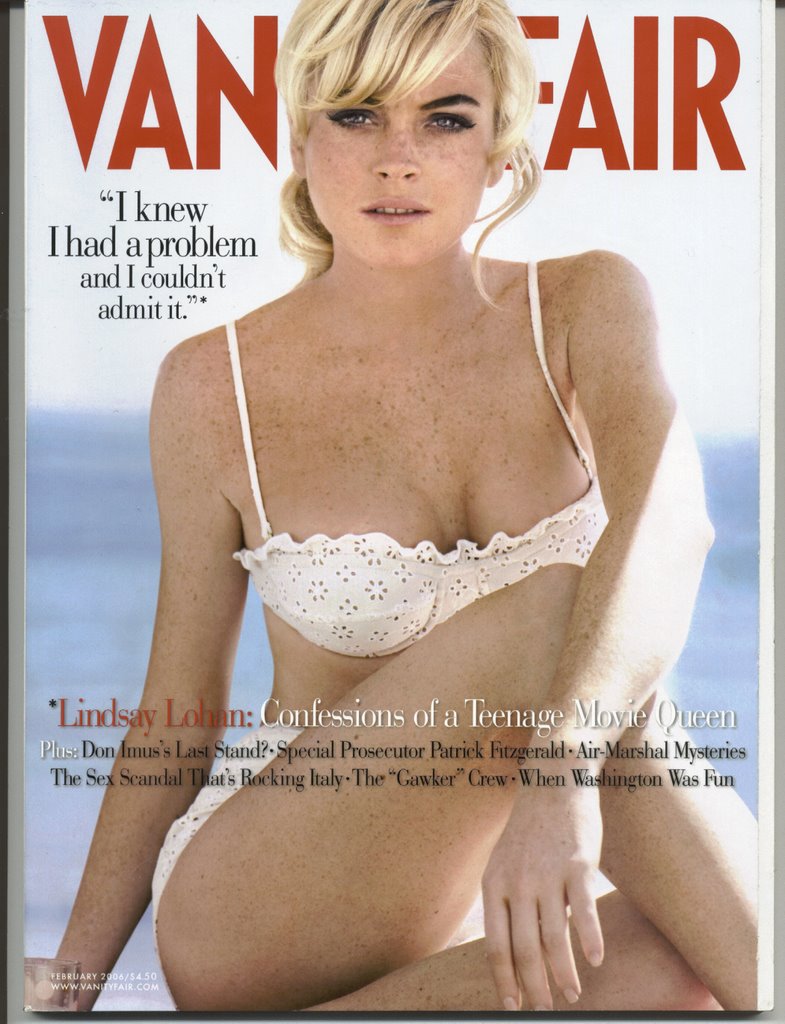
Lindsay Lohan on the cover of the February ’06 Vanity Fair. In Chapter 27, Lohan plays a fan, presumably based on a woman known as “Jude” Stein, whom John Lennon’s assassin, Mark David Chapman, played by Jared Leto, befriends a few days before the murder.

***

In my previous posting, “John Lennon’s Bible and the Occult Significance of 27,” I said, “In Nowhere Man, the number 27 doesn’t come up in relation to Lennon until Chapman appears on the scene.”

Apparently, I hadn’t read my own book carefully enough. On page 33 of the Quick American Archives edition, I say, speaking of Lennon’s “green card,” “On July 27 [1976] his application for a visa was approved.”

Roberto Ponce, my editor at Proceso, pointed this out in his column of December 5, 2005.

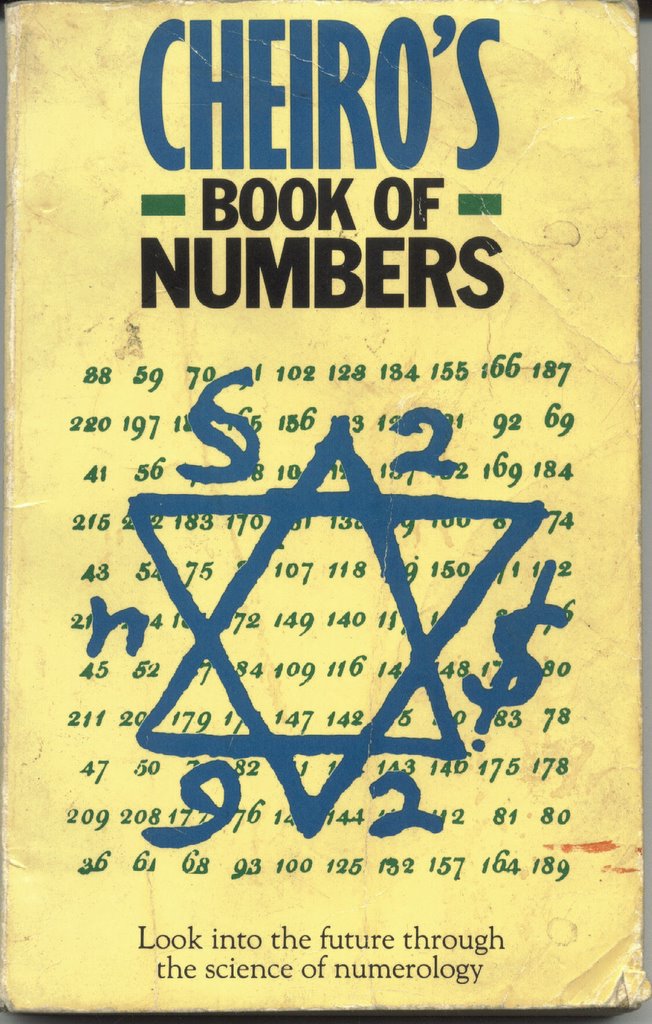
So there you have it. One of the best days in John Lennon’s life, the day the government allowed him to remain in the United States, rather than deport him for a 1968 marijuana conviction, was a number 27—“a fortunate number,” just as Cheiro had said in his Book of Numbers.

(For a full explanation of how the number 27 “karmically” connects Chapman to Lennon, please see my earlier posting, “The Roots of Chapter 27.”)

Sunday, February 26, 2006

Astute Readers, Aspiring Censors, and IMDB: The Chapter 27 Page

Jared Leto as Mark David Chapman in Chapter 27.


As one astute reader of this blog pointed out, Nowhere Man, my John Lennon biography, is not the first book to mention “Chapter 27.” That honor, if I may use such a word, belongs to Jack Jones’s Mark David Chapman bio, Let Me Take You Down, which I used for my own Chapman research and credited accordingly. But one of the flaws in Jones’s book is that he was unaware of the numerological significance of the number 27—that it’s more than the number that follows 26, the final chapter of The Catcher in the Rye—and he didn’t show how Chapter 27 played into the heart of Lennon’s obsession with numerology, the number 9, and all its multiples. Nor did Jones show how, in a very spooky way, the number 27 karmically tied Chapman to Lennon, and gave the events a more chilling resonance. (For a full explanation of all this, please see my first two postings: “The Roots of Chapter 27” and “John Lennon’s Bible and the Occult Significance of 27.”) That’s why Jones mentions Chapter 27 only once, early on in his book, and never elaborates on it.

The Chapman section in Nowhere Man, which I call “The Coda,” picks up where the Jones bio leaves off, bringing Chapter 27 to the forefront of the story. It probes the meaning of what Chapman did more than it plumbs the ooze of Chapman’s mind, from Chapman’s lunatic point of view, as the Jones bio does.

That’s why the only people who seem to fully understand what Chapter 27 means are those who’ve read Nowhere Man or this blog. That’s also why the Mexican newsweekly Proceso has been covering this story in-depth, wasting no time in saying that Chapter 27, the movie, comes from “Chapter 27” in Nowhere Man. In other words, if the producers of Chapter 27 hadn’t read my book, then they’d be calling their film Let Me Take You Down. But they totally get the numerology thing, and they’re placing all their bets on number 27—which is one reason they’re releasing the movie in 2007, probably on September 27.

Some people, presumably enraged Beatles fans, are not happy about this. Perhaps believing that Chapter 27 will inspire other deranged individuals to assassinate a celebrity so they, too, can spend the rest of their lives rotting in jail, these fans are petitioning for a boycott of the film. Apparently, they don’t think that Chapter 27 is getting enough publicity on its own—even with 500 newspapers running stories about Lindsay Lohan’s asthma attacks and Jared Leto’s diet; Yoko Ono herself denouncing the film (except when she’s collaborating on it); and Sean Lennon “dating” Lohan. These fans are also apparently unaware that censorship always backfires.

The case of one Richard M. Nixon should serve as a cautionary tale. The week the Watergate scandal broke in 1972, Nixon, in an attempt to distract the country, ordered the FBI to shut down every theatre showing Deep Throat, confiscate the prints, and arrest the filmmakers and actors on obscenity charges. The result: a mediocre porn flick, shot in a week for $25,000, became the 11th-highest-grossing film of 1973, with earnings of over $600 million, and Linda Lovelace became the world’s first porno “superstar.” (And Nixon still had to resign the presidency, in disgrace, to avoid impeachment.)

I might also remind any aspiring censors that long before Chapman was autographing copies of The Catcher in the Rye in his prison cell, the book was a perennial best-seller, thanks in part to the high school principals all over America who’d been banning it for 29 years.

***

To get a sense of all the “bad karma” swirling around this film, I took a look at the Chapter 27 page on IMDB, the Internet Movie Data Base, which includes a public forum on which I posted a few comments. One of my postings, an attempt to explain the meaning of Chapter 27, prompted another writer, who calls himself Berberis, to talk about his aversion to the word “hate,” which he said “is bandied about on this board—and others—with a willingness I find both alarming and saddening.” Speaking of Chapman, he then asks if the level of hatred towards people we don’t understand is a recent development, or if it’s just easier to express now.

I told him, “Obviously the Internet has made it easy for any maniac who knows how to use a computer to broadcast their hatred worldwide. As for somebody like Chapman: a good way to become a target of virulent hatred is to murder one of the most beloved icons of the 20th century. I, however, think it’s better to make an effort to understand people like Chapman, which is what I did in the final section of Nowhere Man, what Jack Jones did with his Chapman bio—and what I hope the producers of Chapter 27 are doing.

“The original draft of Nowhere Man ended the afternoon of December 8, 1980, before the murder. I wanted to show people what the world looked like through John Lennon’s eyes, and that vision had nothing to do with Chapman. But my publisher insisted that I make an effort to explain what Chapman did—because he didn’t understand it. Since I’d attended the court proceedings and felt I had something new to say—and since the numerology angle gave the story a deeper resonance—I agreed to write the section called ‘The Coda.’

“I was, of course, horrified and repulsed by the murder. But in writing about Chapman, I came to feel a certain sympathy for him because he was (and probably remains) a deeply disturbed human being—the ultimate Nowhere Man.”

Chapter 27 should be allowed to stand or fall on its own. If the film’s a disaster, then the media will crucify it, as they did with Lennon, the clueless Broadway musical, which closed after 40-some-odd performances and lost millions of dollars. But if Chapter 27 is any good—and I hope it is—then it will bring us to a deeper understanding of an event which, on the surface, seems to make no sense at all. And that would be a rare step in the right direction—one that I might even get a little credit for.

Thursday, February 16, 2006

Perfect 9: For Yoko Ono on her 73rd Birthday

John Lennon, age 29, and Yoko Ono, age 37, in Denmark. From Nowhere Man: The Final Days of John Lennon, AP/Worldwide Photos

February 18 is Yoko Ono’s 73rd birthday and to commemorate the occasion I’ve done a numerological workup, based on John Lennon’s bible, Cheiro’s Book of Numbers, on the “name number” and “birth number” of rock’s foremost widow.

Yoko
1727
17 = 8

Ono
757
19 = 10 = 1
8 + 1 = 9

Or:
Yoko Ono
Lennon
355575
30 = 3
8 + 1 + 3 = 12 = 3

Born February 18, 1933
2 + 18 + 1933 = 27 = 9
or
2 + 9 + 7 = 18 = 9

I explained in my previous post, on the occult significance of 27, how I calculated these numbers, and their numerological significance according to Cheiro. But I didn’t explain the numbers 12 and 3, which are also the name numbers of “John Lennon.”

The number 12, Cheiro says, is the number of “suffering and anxiety of the mind, it is indicated as ‘the sacrifice’ or ‘the victim’ and generally foreshadows one being sacrificed for the plans or intrigues of others.” Threes, on the other hand, love discipline, are “decidedly ambitious, are never satisfied by being in subordinate positions” and “rise to the highest positions in any profession they choose.” Their aim, he adds, is “to have control and authority over others.” (John’s nickname, “Walrus,” is a 3, as well.)

***

On my way to meet a friend (who blogs anonymously) at an Authors Guild gathering, I saw Yoko Ono on the street. It was about 6 p.m. on January 25, and I was walking uptown, at a brisk pace, on New York’s 5th Avenue, near 38th Street. She caught my eye from about a half block away—a tiny woman wearing a white leather jacket, a mod white cap, and black pants, walking downtown, at an equally brisk pace, accompanied by a tall, athletic-looking fellow, whom I assumed was a bodyguard. But I still wasn’t sure it was her until we strode past each other and I saw the side of her face, behind her sunglasses. I was amazed: she looked even younger than she did the last time I saw her, in September 2002, the day I testified on her behalf at a copyright infringement trial. I’d go so far as to say that she’s the youngest-looking 73-year-old woman I’ve ever seen—and it made me think about what she said in an interview that I’d read a few months ago in what I believe was a British women’s magazine. Death, Ono told the reporter, was avoidable and she didn’t believe in it—or words to that effect.

I’d like to know if she was talking about a Faustian bargain, cryogenic freezing, or an impending medical breakthrough. Because there is no other way to explain eternal life, at least in the physical sense.

Wednesday, February 08, 2006

Program Note


For any Spanish-speaking readers: I will be talking with Eli Bravo about Nowhere Man and John Lennon on Union Radio Venezuela on Friday, February 10, 12:30-1 pm eastern standard time (1:30-2 pm Venezuela time).

The broadcast is streamed but you need to register. The show is en español.

Photo by Mariola Guerrero, LUN

Sunday, February 05, 2006

John Lennon’s Bible and the Occult Significance of 27


The Catcher in the Rye was, of course, Mark David Chapman’s bible, and the “missing chapter,” 27, was the chapter he wanted to write, as I said in Nowhere Man, in John Lennon’s blood. But Lennon, too, had a bible: Cheiro’s Book of Numbers. After Lennon discovered this book, which explained in simple language the occult “science” of numerology, he couldn’t so much as dial a phone number without first consulting Cheiro, and he couldn’t walk out of the house without finding mystical significance in every license plate, address, and street sign.

Lennon, who was born on October 9, had always been aware of the strong presence of the number 9 in his life. He considered it his lucky number. His son Sean was also born on October 9; he’d written songs titled Revolution 9, One After 909, and No. 9 Dream; Brian Epstein first saw the Beatles at The Cavern on November 9; and he met Yoko on November 9.

But it was only after reading Cheiro that Lennon came to understand that the multiples of 9, particularly 18 and 27, were as important as 9 itself. As Cheiro explained, the single numbers 1 to 9 represent “the physical or material side of things” and compound numbers from 10 on represent the “occult or spiritual side of life.”

Here are a few things Cheiro wrote about 9:

“Number 9 persons are fighters in all they attempt in life. They usually have difficult times in their early years but generally are in the end successful by their grit, strong will and determination. They are hasty in temper, impulsive, independent and desire to be their own masters.”

“When number 9 is noticed to be more than usually dominant in the dates and events of their lives, they will be found to make great enemies, to cause strife and opposition wherever they may be and are often wounded or killed either in warfare or in the battle of life.”

“They have great courage and make excellent leaders in any cause they espouse. Their greatest dangers arise from foolhardiness and impulsiveness in word and actions. They generally have quarrels and strife in their home life. They strongly resent criticism. They like to be ‘looked up to’ and recognized as ‘head of the house.’ For affection and sympathy they will do almost anything, and men of this number can be made the greatest fools of if some woman gets to pulling at their heart strings.”

“This number 9 is the only number that when multiplied by any number always reproduces itself. The number 9 is an emblem of matter that can never be destroyed. At the 9th hour the savior died on the cross. All ancient races encouraged a fear of the number 9. The number 9 is considered a fortunate number to be born under, provided the man or woman does not ask for a peaceful or monotonous life and can control their nature by not making enemies.”

The symbol for number 18, Cheiro wrote, is “a rayed moon from which drops of blood are falling; a wolf and hungry dog are seen below catching the falling drops of blood in their open mouths, while still lower, a crab is hastening to join them. It is symbolic of materialism striving to destroy the spiritual side of the nature. It generally associates a person with bitter quarrels, even family ones, war, social upheavals, revolutions; and in some cases it indicates making money and position through wars. It is a warning of treachery, deception by others, also danger from explosions. When this ‘compound’ number appears in working out dates in advance, such a date should be taken with a great amount of care, caution and circumspection.”

Lennon spent a great deal of time making notes on the “birth numbers” and calculating, according to Cheiro’s arcane formula, the “name numbers” of those closest to him. There were 9’s and 18’s everywhere. Yoko Ono was born February 18. Paul McCartney was born June 18. John equals 18 or 9. (According to Cheiro’s laws, all compound numbers should be reduced to a single number.) Yoko Ono equals 9. Sean Ono Lennon equals 9. Paul equals 9. Richard Starkey (Ringo’s real name) equals 9. Mimi Smith (the aunt who raised him) equals 9. The Dakota, on West 72nd Street (9), was built in 1881, which equals 18 or 9. And the year, 1980, was also an 18 or 9.

In Nowhere Man, the number 27 doesn’t come up in relation to Lennon until Chapman appears on the scene. Cheiro, ironically, calls 27 a “good number” symbolized by the scepter. It is, he says, “a promise of authority, power, and command. It indicates that reward will come from the productive intellect; that the creative faculties have sown good seeds that will reap a harvest. Persons with this ‘compound’ number at their back should carry out their own ideas and plans. It is a fortunate number if it appears in any connection with future events.”

Once upon a time, Mark Chapman—whose first name, according to Cheiro, calculates to 9, and whose last name calculates to 27—I’m sure, would have agreed. He certainly did carry out his plan.

***

Here’s Cheiro chart for calculating name numbers. Each letter is given a numerical value from 1 to 8 as follows:

A=1 B=2 C=3 D=4 E=5 F=8 G=3 H=5 I=1 J=1 K=2 L=3 M=4 N=5 O=7 P=8 Q=1 R=2 S=3 T=4 U=6 V=6 W=6 X=5 Y=1 Z=7

Here’s the complete workup for Chapman:

MARK
4122 = 9

DAVID
41614 = 16 = 7

CHAPMAN
3518415 = 27 = 9

9 + 7 + 9 = 25 = 7

Seven is also the number of John Winston Lennon. Sevens, according to Cheiro, “make extremely good writers, painters or poets, but in everything they do, they sooner or later show a peculiar philosophical outlook on life that tinges all their work. They often become rich by their original ideas or methods of business but they are just as likely to make large donations to charity. They create a religion of their own, but one that appeals to the imagination and is based on the mysterious. They have wonderful dreams and a great leaning to occultism; they have a gift of intuition, clairvoyance, and a peculiar quieting magnetism of their own that has a great influence on others.”

You can look it up—in the Book of Numbers.

Saturday, January 21, 2006

The Roots of Chapter 27 (Including “Chapter 27” Itself)

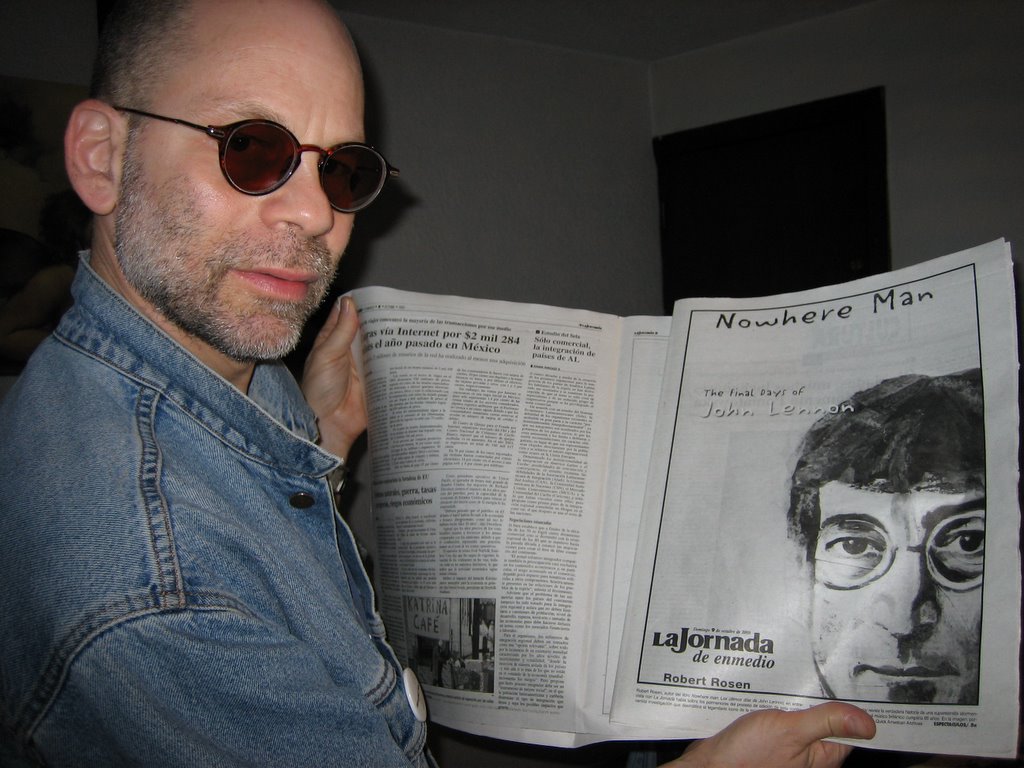
The author in Mexico City, October 9, 2005, reading La Jornada.


I’ve been telling people for months that if I can ever think of a reason to start a blog, I’ll start a blog. Well, today I thought of a reason. A production company, Peace Arch Entertainment, is making a movie starring Lindsay Lohan and Jared Leto. It’s called Chapter 27, and it’s about the relationship between John Lennon’s assassin, Mark David Chapman (Leto), and a fictional Lennon fan (Lohan) most likely based on a woman known as Jude, whom Chapman befriended a month before the murder.

The title of the movie was presumably inspired by “Chapter 27” in my book, Nowhere Man: The Final Days of John Lennon.

Chapter 27 is supposedly the missing chapter of J.D. Salinger’s classic novel of disaffected youth, The Catcher in the Rye, which Chapman says “inspired” him to murder Lennon. (Catcher ends on Chapter 26.) Chapman, who saw himself as a modern-day incarnation of Holden Caulfield, the hypocrisy-hating narrator of Catcher, believed that if he murdered Lennon, he’d write Chapter 27 in Lennon’s blood and literally vanish into the pages of the book to become The Catcher in the Rye of his generation.

In Nowhere Man, I explain the roots of Chapman’s insane “theory,” going into great detail about numerology, particularly Lennon’s obsession with it and his belief in the power of his “birth number,” 9 (he was born on October 9), and all its multiples.

The key scene that explains how 27 “karmically” connects Chapman to Lennon occurs at Chapman’s 1981 court hearing (which I attended as a journalist). Just before the judge sentences Chapman to 20 years to life for Lennon’s murder, Chapman speaks to the hushed courtroom:

“‘I feel like a bloodied prizefighter in the 27th round,’ [he says]. These are the exact words he said to a psychiatrist in Hawaii after his suicide attempt. But nobody knows what he’s talking about. They understand neither the significance of 27, the triple 9, nor the significance of Chapter 27, the missing chapter of The Catcher in the Rye, Chapman’s chapter written in Lennon’s blood. They are just the meaningless words of a madman, signifying nothing.”

Nowhere Man is the only book (or publication of any kind) that explains any of this—the importance of 27 beyond being the number that follows 26.

Though they have not yet credited me for my research or reporting, I can’t help but be flattered that the producers of Chapter 27 appropriated from my book the title, and perhaps even the concept, of their movie. They had the legal right to do so, as titles and concepts cannot be copyrighted. Of course, it would have been nicer if they’d given me credit, something along the lines of, “Inspired by Robert Rosen’s Nowhere Man: The Final Days of John Lennon.” But, as I understand it, that’s not the way Hollywood works, and there’s not much I can do about it. Still, Chapter 27, the movie, starring the hugely popular Lindsay Lohan—who I think looks gorgeous on the cover of the February ’06 Vanity Fair—will be a good thing for Nowhere Man, even if it’s not officially credited.

In Latin America, where the Spanish-language edition of the book has a much higher profile than the English-language edition does in the U.S., the media is already acknowledging my contribution to the movie. That’s how I found out about Chapter 27.

In early November, a few days after I’d returned to New York from a Nowhere Man promotional tour in Mexico and Chile to commemorate Lennon’s 65th birthday, my editor at Paniko, a Chilean webmag I contribute to, e-mailed me to ask if I knew someone was making a movie called Chapter 27, or Capítulo 27 as it’s called en español.

I told him no, I’d never heard of it and was flabbergasted to learn what the movie was about.

A few weeks later, on December 5, Proceso, which is more or less the Mexican equivalent of Time or Newsweek, and which I occasionally write for as well, ran the first of two articles (the second ran on December 9) explaining the connection between Nowhere Man and Chapter 27. (If you don’t speak Spanish, you can still get the gist of these pieces by translating them with Google language tools.)

Lennon presencia su propia muerte

PLATOS LASER: Mark Chapman, el asesino de Lennon

It is, of course, gratifying to get this kind of coverage in Latin America, where the media has thoroughly scrutinized and deconstructed Nowhere Man, and apparently is under the impression I’m some sort of “celebridad Americano.” And even here, in America, where I’m essentially anonymous, the January 20, 2006, edition of the New York Post, in a story picked up by the Associated Press, mentioned Nowhere Man in connection with Chapter 27, though stopped short of saying that the movie’s title was inspired by my book.

That’s why I’ve begun keeping this blog. The Internet is the great equalizer, and I’m using it to go on record, in English, that “Chapter 27” in Nowhere Man is the inspiration for Chapter 27, the movie. I’d also like to appeal directly to Chapter 27’s producers. Come on, guys. It would be very cool and much appreciated indeed if you officially gave me credit for my contribution to your film.

And I’d also like to suggest to whatever publishers might be reading this that a new edition of Nowhere Man, which could be published in 2007 to coincide with the release of Chapter 27, would be an excellent synergistic way to promote both the movie and the book—especially if the new cover is a photo from the movie: the scene where Lennon signs Chapman’s Double Fantasy LP in front of the Dakota.

***

Though I don’t plan on updating this blog every day, I will be writing as time permits, or if there’s something new to say about the subject at hand—such as another story in the New York Post.

For now, I’ll leave you with “Chapter 27” itself, which appears in “The Coda”—the final section of Nowhere Man—and details Chapman’s mental disintegration in the months before the murder, and the legal proceedings afterward. Unlike Nowhere Man’s Lennon sections, which I wrote with Yoko Ono and her attorneys, figuratively speaking, looking over my shoulder (and my own lawyers literally doing so), in “The Coda,” I didn’t have to worry about the subject—Chapman—suing me if he didn’t like something I said, and that, to say the least, was liberating.

Chapter 27

On the stifling day of August 24, 1981–a Honolulu-like day–about two hundred members of the press and a handful of spectators wait for the famous assassin to be brought before the New York State Supreme Court in downtown Manhattan and sentenced for his crime of second-degree murder. The courtroom is packed, and the energy level is high with anticipation, the kind of anticipation that normally might precede a rock concert. Everybody cranes their necks to get a good look at the manacled star as he is marched into the room wearing a bulletproof vest under a dark blue shirt. He looks sad and pathetic, a pawn in the clutches of something he barely understands. Though there is no longer any need for a trial, there is a primal need for a public shaming, a verbal tarring and feathering before the world media. Everybody knows why Mark David Chapman did it. They’ve known it for eight months. He did it for fame.

And there’s certainly a lot of fame up for grabs in the courtroom this day. It would be unfair to suggest that everyone there–all the journalists, expert witnesses, lawyers–has the same objective: to be famous. The judge, Dennis Edwards, for example, appears to be utterly benign, a kindly old man, low-key in his demeanor. Indeed, he seems almost bored by what is happening, and so drowsy from the heavy August humidity that he dozes off for a few moments at the bench, but nobody seems to notice, or care. And the defense attorney, Jonathan Marks, carries himself with an air of dignity. He does seem to be concerned that his client be given a fair hearing.

But there appears to be only one difference between Chapman and virtually everybody else who is participating in this hearing: The defendant has far more radical ideas about how far he’s willing to go to achieve celebrity. For one grotesque moment, Chapman, a cowardly loser, an empty shell of a human being, managed to manipulate himself into acting with the courage of his monstrous convictions. He has done exactly what he wanted to do; he has transformed himself into the world’s most famous antihero.

Consequently, the air is thick with vengeful jealousy. People are furious at Chapman not only because he killed John Lennon, but also because he committed a brutal attack on the status quo, an act of class warfare. John Lennon was a very successful professional, a member of the power elite. And the very successful professionals in this courtroom take it personally. Chapman has stolen John Lennon’s fame, and they’re not about to let him enjoy it. But the sad fact is that whatever fleeting fame they might be able to grasp this day will depend strictly upon their relationship to the killer. I psychoanalyzed him. I prosecuted him. I wrote a story about him.

The expert witnesses have prepared well for their moment in the spotlight, for this merging of the personal and historical. The psychiatrists could be mistaken for actors auditioning for a TV miniseries. If there is fault to be found in their performances, it’s that most of them are transparent. They smile too much. They look too happy, too smug, as though they aren’t concerned with any antiquated notions of justice, but are thinking instead about book deals.

The psychiatrists for the prosecution repeat what they’ve been saying since December: Chapman was sane, he knew exactly what he was doing, and he did it for fame. The defense psychiatrists, of course, talk of his schizophrenia, the “Little People,” his pain.

Apparently, nobody on either side is familiar with Yoko Ono’s intriguing statement on reincarnation: “Your brother is the person you murdered in your past life.” So nobody has bothered to ask Chapman, Do you expect to be John Lennon's brother in your next life?

The Lennon fans add a surreal touch to the proceedings. Many of them are long-haired in that “John ’68” style. They wear wire-rimmed glasses and T-shirts with Lennon’s image on it. They’re outnumbered by reporters by at least two to one, and they’re anxious to share their opinions with “the men of the press.”

“Mark David Chapman,” opines one fan, “was just a cowardly fuck who did it for fame.”

“Now he deserves to die,” adds another. “And I’d be happy to pull the switch.”

Allen Sullivan, the prosecutor, describes Chapman as a man who “has never exhibited any true remorse” and who is “only interested in himself, his own well-being, what affects him, what’s important to him at this particular moment.” He then proceeds to hammer home the point that Chapman “did it for fame, personal aggrandizement, to draw attention to himself, to massage his own ego. The defendant was concerned throughout that he become famous.” His proof: Chapman wanted photographer Paul Goresh, who’d previously photographed Lennon signing Chapman’s copy of Double Fantasy, to wait until Lennon returned from his recording session so he could get a photo of the murder.

Sullivan makes it sound as if the desire for fame is a shameful thing, a crime in itself. But his words ring hollow. It’s an ugly show that intentionally overlooks the one hideous fact that hangs like fog in the courtroom. It is the one fact that nobody dares mention: In America in 1981, particularly in a city like New York, fame is a crucial commodity, and anonymity is a toxic condition that can lead to murderous rage.

Holden Caulfield, or John Lennon for that matter, would have puked.

Before Judge Dennis Edwards passes sentence, Chapman is given the opportunity to speak. But there’s little he can do to help himself. Chapman has already pleaded guilty. The evidence against him is overwhelming. There is literally a smoking gun. The verdict may as well have been preordained. He is getting locked up somewhere for the rest of his life. Once, the only real question was if it was going to be in prison or in an institution for the criminally insane. Now there is no question.

Looking like a martyr in a bulletproof vest, he stands up and faces the judge. He has his “Bible” with him–his well-thumbed copy of The Catcher in the Rye. “I’ve chosen this passage as my final spoken words,” he vows–a vow he'll soon break. He opens to Chapter 22, in which Holden, after being thrown out of school for failing four subjects, tells his little sister, Phoebe, what he wants to do with his life.

The murderer begins reading. “Anyway, I keep picturing all these little kids playing some game in this big field of rye and all.” He’s nervous and at first he falters. Then something clicks and he hits his stride, his voice suddenly strong and clear, smooth and flawless. He is well rehearsed, and he does Salinger justice.

“Thousands of little kids and nobody around–nobody big, I mean–except me. And, I’m standing on the edge of some scary cliff. What I have to do, I have to catch everybody if they start to go over the cliff–I mean if they’re running and they don’t look where they’re going I have to come out from somewhere and catch them. That’s all I’d do all day. I’d just be the catcher in the rye and all.”

This is his message and confession. Mark David Chapman is the Catcher in the Rye for his generation; he has murdered John Lennon to save the little children.

Then Chapman tells the hushed courtroom, “I feel like a bloodied prizefighter in the 27th round.” These are the exact words he said to a psychiatrist in Hawaii after his suicide attempt. But nobody knows what he’s talking about. They understand neither the significance of 27, the triple 9, nor the significance of Chapter 27, the missing chapter of The Catcher in the Rye, Chapman’s chapter written in Lennon’s blood. They are just the meaningless words of a madman, signifying nothing.

The judge then passes sentence, and Chapman is taken away still wearing manacles. He walks fearlessly out of the courtroom, holding his head high, veritably glowing with pride. He’s done what he came to do.

Afterwards, outside the courtroom, the media, with their pens and floodlights and cameras at the ready, descend upon the expert witnesses for the prosecution, and Sullivan, the prosecutor. They are the winning team. They stand in a tight little knot, preening in the floodlights, everybody smiling broadly, patting each other on the back, congratulating themselves on a job well done. The only thing missing is champagne, which will probably come later, at the private party.

“Was justice served?” the media demands to know.

Of course justice was served. The killer will most likely spend the rest of his life in jail.

Then there is nothing for them to do but go home and watch themselves on the evening news, look at their pictures in the morning newspapers.

Except for Mark David Chapman. He will continue the great fall described in the dark prophesy in Chapter 24 of The Catcher in the Rye. Mr. Antolini, an old teacher of Holden’s–another “pervert,” actually–tells him, “This fall I think you’re riding for–it’s a special kind of fall, a horrible kind. The man falling isn’t permitted to feel or hear himself hit bottom. He just keeps falling and falling.”

Chapman will soon discover what lies at the bottom of the “bottomless” pit: solitary confinement in Attica, possession by demons.

Imagine no possession.

“That kills me.”

That’s what Holden Caulfield would have said, anyway.

From Nowhere Man: The Final Days of John Lennon
Quick American Archives, 2002
© 2000, 2002 Robert Rosen