Monday, February 19, 2007

A Gift to a Dying Movie

I thought that I heard him laughing.
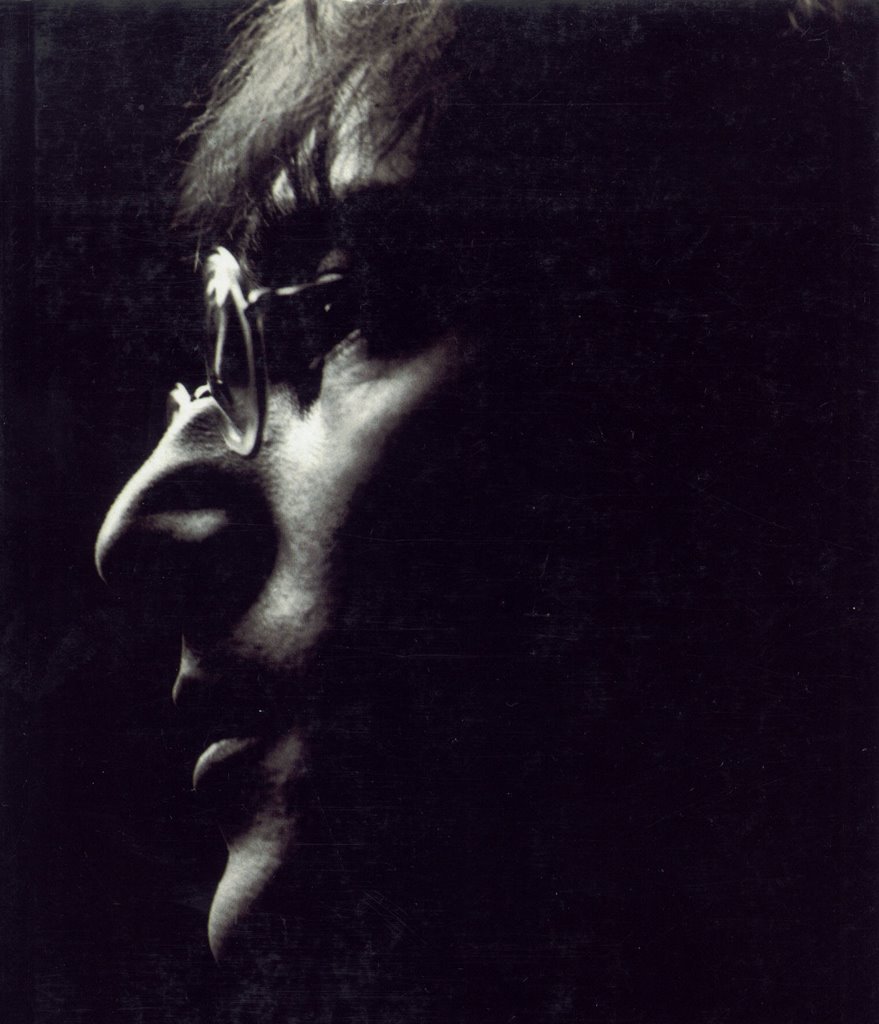
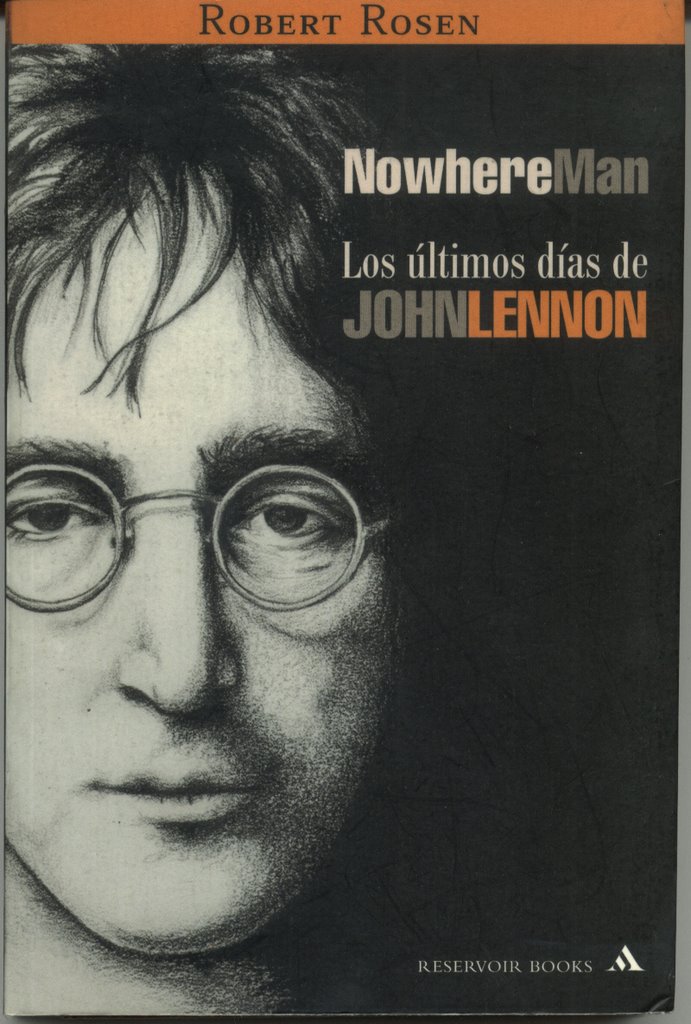
Detail from photo in Nowhere Man: The Final Days of John Lennon, Quick American Archives 2002. ©AP/Wide World Photos


Anybody who’s been reading this blog knows that I’ve spent the past few weeks trying to figure out how a seemingly clueless organization like Boycottchapter27.org engineered a PR coup that was the equivalent of The Gang That Couldn’t Shoot Straight pulling off The Great Train Robbery. How were they able to inject into a high-profile gossip column, with impeccable timing, news of their boycott and then have that story flashed around the world in a variety of languages?

  • I suggested that they were a well-financed creation of Chapter 27’s producers, Peace Arch Entertainment.
  • I suggested that they were evil PR geniuses who’d formed a maverick agency and were drumming up business with an ugly but effective postmodern publicity stunt.
  • I suggested that they were a group of George Bush-style, ex-frat-boy publicity-hounds—who were fond of saying: “You’re either for the boycott or you’re for murder.”

But in my reverie, I’d overlooked the primary rule of solving any mystery: The simplest, most obvious answer is usually the right one. It’s now pretty obvious that Boycottchapter27.org is as misguided and naive as they appear to be. Ignoring the well-documented history of what happens when somebody tries to censor or repress in any way an “offensive” movie or other work of art, they handed executive producer John Flock a gift on a silver platter: a nasty, ongoing, headline-generating boycott for a movie of questionable quality that from the very beginning was in deep trouble with critics and fans and that has still not been picked up for theatrical distribution in the U.S. Flock, of course, accepted the gift graciously…and allowed his real public relations specialists to do what they’ve been doing so remarkably well for the past year: They put Chapter 27 back in the news, long after it should have died a natural death.

The boycott was a five-star success—for Peace Arch Entertainment. Even Yoko Ono loved it. Apparently forgetting that she’d coached Sean Lennon’s (former) BFF Lindsay Lohan in her role as Jude, a Lennon groupie who befriends Jared Leto’s Chapman a few days before the murder (Lohan says Ono gave her “the confidence” she needed to play the part), the reigning Queen of Media Manipulation told Entertainment Weekly, of the two thousand people who’d signed the boycott petition, “It’s very sweet of them. John would have thought so, too.”

Ono—whose spokesman, Elliot Mintz, is also on Paris Hilton’s payroll—understands perfectly well that all publicity is good, free publicity is better, and free, sympathetic publicity is best of all. She knows that two thousand people, in the scheme of things, is a miniscule number, and if the boycott accomplished anything, it probably made 200,000 people who couldn’t have cared less about the movie very curious to see it. And if John Lennon is paying attention somewhere, I think he’s laughing his balls off at the sheer absurdity of it all. (I’m finding it pretty funny myself, and I haven’t even seen the movie yet. Note to John Flock: Please send screener. Maybe I can help.)

The Howard Stern Show

One thing that did surprise me about the boycott was a comment that a reader posted about my last piece, “What Are They Going to Do for an Encore, Burn the Book?” That the comment was typical of the ridicule and innuendo that people associated with Boycottchapter27.org tend to post in response to anybody who disagrees with them wasn’t surprising. That it came from Fred Norris—who I later learned is a soundman and on-air personality on The Howard Stern Show—was astonishing.

Stern, whom I’ve listened to enough to respect and occasionally admire, is a veritable free-speech martyr, and it’s mind-boggling that anyone who works on the show and makes his living pushing the bounds of “good taste” could support a boycott that’s trying to repress a legitimate artistic endeavor, no matter how offensive he might find it. Norris, apparently, has learned little about the concept of free expression in the 28 years he’s been with Stern, and it makes me wonder if he’s ever read the Boycott Chapter 27 blog, which, last time I looked, seems to have transformed itself into an educational site, burying their hate speech under piles of academic verbiage that nobody’s ever going to read.

Correction

I’d said in response to Norris’s derisive comments about Nowhere Man that the book was a bestseller in four countries and three languages. Actually, it’s five countries; I’d forgotten that we’d killed in Colombia, too. (For the record, Fred, the other countries are the U.S., England, Mexico, and Japan. And though it sold out in Chile as well, there weren’t enough copies in print for it to technically qualify as a bestseller.)

A Final Word (I Hope) on the Boycott

People attempt to repress or censor works of art out of hate, fear, ignorance—and a deep-seated belief that they alone have been divinely anointed to judge the quality and intent of works that, more often than not, they haven’t seen. But these boycotts always fail, because their instigators ignore one of the most fundamental laws of human nature: The best way to get people to look at something is to tell them they can’t look.

And Now a Relevant Word from My Wife

My wife, Mary Lyn Maiscott, blogs for Vanity Fair. Today she posted the following on their Oscar site, Little Gold Men:

Jackie Earle Haley’s Monster Performance

Quick plea: If you haven’t done so already, go see Little Children. Though I went for the reliable and wonderful Best-Actress-nominated Kate Winslet (who should get a special award for her willingness to forgo any discernible makeup), I was particularly moved by Jackie Earle Haley, nominated for Best Supporting Actor. In contrast to the somewhat cartoonish men (husband, lover) in the life of Winslet’s character, Sarah, Haley portrays neighborhood pedophile Ronnie as a complex, perplexing man, whose conflicting feelings and urges emanate from the large blue eyes in his cavernous face. Some of the best art shows us the humanity of people that society often deems monsters, and, though its extremely unlikely Haley will win the Oscar—what with Eddie Murphy’s perfect, pumped-up Dreamgirls performance—his portrayal of a tormented sex offender who loves his devoted mother and tries to pursue a “normal” life puts him in the Charlize Theron/Kevin Bacon/Jared Leto line of commendable, risk-taking actors. This film refuses to be predictable and pat in other ways as well; note the diverse reactions to a pedophile in the midst of a family-oriented suburban neighborhood. It also pulls the rug out from under us just as we’re about to—hey, just go see the movie.

Monday, February 12, 2007

What Are They Going to Do for an Encore, Burn the Book?

Long before Mark David Chapman was autographing copies in his jail cell, The Catcher in the Rye was a perennial bestseller.

***

In my previous posting “With Enemies Like This, Who Needs Friends?” I suggested that to generate publicity for their film Chapter 27
—starring Jared Leto as Mark Chapman and Lindsay Lohan as Jude, a Lennon groupie—Peace Arch Entertainment created and continues to finance Boycottchapter27.org. Such a tactic is hardly farfetched. With the notable exceptions of O.J. Simpson and Michael Jackson, the Golden Rule of Hollywood is: All publicity is good, no matter what they say. Press coverage means interest, and interest means distribution deals and ticket sales. Any time the government or any group attempts to boycott or censor a work of art (and I use the term “art” in the broadest possible sense), everybody wants to find out for themselves what all the fuss is about. So they run to see it. It never fails.

The classic example, which I cited a year ago in one of my first postings, “Astute Readers, Aspiring Censors, and IMDB: The Chapter 27 Page,” is Richard Nixon’s 1972 attack on Deep Throat. The week the Watergate scandal broke, Nixon, in an attempt to distract the country, ordered the FBI to shut down every theatre showing the film, confiscate the prints, and arrest the filmmakers and actors on obscenity charges. The result: a mediocre porn flick, shot in a week for $25,000, became the 11th-highest-grossing film of 1973, with earnings of over $600 million, and Linda Lovelace became the world’s first porno “superstar.”

I also pointed out that long before Mark David Chapman was autographing copies of The Catcher in the Rye in his prison cell, the book was a perennial best-seller, thanks in part to the high school principals all over America who’d been banning it for 29 years.

And in 1999, of course, there was Rudy Giuliani’s attempt to shut down the “Sensation” exhibit at the Brooklyn Museum because one of the paintings, Chris Ofili’s “Holy Virgin Mary,” was partially composed of elephant dung, and the former New York mayor found it offensive. The result: 170,000 people, the most that had come to the museum in a decade, showed up to look at the painting.

Publicity is not an easy thing to come by. A person’s name (or the name of an organization) does not end up in a high-profile gossip column by accident. In general, if you want to see your name in boldface, you have to pay a well-connected PR firm between $3,000 and $10,000 per month to pull the required strings; some authors have been known to spend their entire advance on a month of PR—with no guarantees.


That the Chapter 27 boycott was the lead item in a gossip column in the New York Daily News just as Chapter 27 was being buried under an avalanche of less-than-kind reviews following its Sundance premiere, and that the story was then flashed around the world, seemed too well timed, and far too sophisticated a result for an organization whose blog, at best, rises to the level of coherent hate speech.


So I raised the question: Is Boycottchapter27.org an arm of Peace Arch Entertainment?


The people behind Boycottchapter27.org were not happy with this, and, predictably, they responded with an invective-and-innuendo-filled diatribe that questioned everything from my sexual orientation to my research methods. But they didn’t answer the question.

So I went to their blog and asked them flat out: Are you now taking, or have you ever taken, money from Peace Arch Entertainment, or any individual or corporate entity affiliated with Peace Arch Entertainment? A simple yes or no will suffice.


They said no, they weren’t taking money from Peace Arch Entertainment.


Whether this is true or not I can’t say. Though, for the time being, I’ll give them the benefit of the doubt and assume that they are who they say they are and what they seem on the surface to be: a loosely knit coalition of Chapman-hating businessmen and lawyers, apparently based in Pompano Beach, Florida, who have a lot of free time, who have money to burn on PR, who want to destroy Peace Arch Entertainment as punishment for having made Chapter 27, and who routinely respond on their blog and elsewhere with hateful (and often incoherent) rants to any suggestion that their boycott is ill-conceived or counterproductive, or that people, if they’re so inclined, should just go see the movie and make up their own minds about it.


Since their boycott began a year ago, Chapter 27 has:

  • Had its world premiere at Sundance.
  • Had its European premiere at the Berlin Film Festival.
  • Been picked up for theatrical distribution in Europe, Asia, and South America.
And as the controversy continues to fuel the fire, it certainly looks as if, despite the overwhelmingly savage reviews, Chapter 27 will reach a mass American audience, even if it’s only in select “art houses” and on DVD—because people are curious and they want to see it.

So why then are these presumably successful businessmen and attorneys boycotting the film if their boycott is doing the exact opposite of what they claim to want? Why are they breathing life into a movie that most critics have written off as a vanity project lacking in insight?


They could be completely delusional, I suppose. Or they could be a newly formed PR agency, drumming up business with an ugly but effective postmodern publicity stunt. (They did offer to boycott my next book for $5,000.) Or more likely they’re just a couple of ex-frat boys into publicity for publicity’s sake: they enjoy reading about themselves in the tabloids, and that’s all there is to it.

Tuesday, February 06, 2007

With Enemies Like This, Who Needs Friends?

So much has been written about Chapter 27 since I posted “Critiquing the Critics,” I’ve pulled the sampling of reviews that originally appeared at the tail end of that piece (and that I was adding to every day) and I’ve posted them at the end of this piece—for the purpose of putting into perspective some of the events that have been swirling around the film since it premiered at Sundance two weeks ago.

The first Chapter 27 reviews to appear, with the notable exception of
the one in Salon, were negative in the extreme. Led by Roger Friedman of Fox News, they were the critical equivalent of a stomping and chain whipping administered by the Hell’s Angels. It seemed as if the bad reviews had opened an insurmountable lead. But then, spurred on by high-profile publicity about the Chapter 27 boycott—which created a backlash to the backlash—the film rallied in the second half. Critics writing for such magazines as Entertainment Weekly and The Hollywood Reporter liked it, and put Chapter 27 back in the game.

Of the 12 reviews I’ve discussed so far (including the excerpts and links to the 10 posted below, one of which does acknowledge the overlooked numerology angle), the score is as follows:
  • Thumbs Down: 8
  • Thumbs Up: 3
  • Thumbs Sideways: 1
In other words, though the bad reviews still hold a substantial lead, thanks to the Chapter 27 boycott, there’s a controversy brewing that’s keeping the film in the news, and that will—if I were to place a bet—lead to theatrical distribution.

The boycott publicity, in fact, was so well orchestrated that I began to wonder if Peace Arch Entertainment, the film’s producers, were funneling money to Boycottchapter27.org. If so, how much, and is there a reduced rate for independent journalists? Because if their prices aren’t too high, I’d like to hire them to organize a boycott of my next book. To steal a line from Hogan’s Heroes: “With enemies like this, who needs friends?”


One thing that both the critics and boycotters seem to be overlooking is that if the filmmakers have proven anything, it’s that they’re determined and probably a little crazy. And even if Jared Leto has to sit in a mailroom stuffing DVDs into envelopes, and Jarrett Schaefer has to type the address labels and seal the flaps with his personal spit, they’re going to find a way get Chapter 27 into the hands of its audience.


In any case, here are excerpts and links to 10 Chapter 27 reviews:

Owen Gleiberman of Entertainment Weekly says: “The film may tell you little about Chapman that you didnt already know, but Jared Leto, who gained 65 pounds for the role, disappears inside this angry, mouthbreathing psycho geek with a conviction that had me hanging on his every delusion.”

Duane Byrge of The Hollywood Reporter says: “Jared Leto is mesmeric as the bloated, deranged Chapman. It’s a brilliantly measured performance, evincing the tale of a madman through his own awful rhyme and reason.”

Dennis Harvey of Variety says: “Chapter 27 peers into the mind of a real-life, insane killer and finds almost nothing of interest.”

Scott Weinberg of Cinematical.com says: “I know it has something to do with J.D. Salinger’s The Catcher in the Rye, but any other specifics are lost beneath waves of babble, tedium and pretense.”

Ty Burr of the Boston Globe says: Writer-director Jarrett Schaefer never convincingly explains the demons that drove Chapman. The result is an unpleasant act of cinematic rubbernecking that celebrates a deserved nonentity.

Kevin Polowy of Cinematical.com says: “Most of the ‘action’ takes place as Chapman waits and waits (and waits) for Lennon outside of his famous Dakota Building apartment in Manhattan, with an occasional argument between the voices in the assassins head to stir things up a bit.”

Nick Marshall of Cynematik says: “J. P. Schaeffer played it too safe.”

Comingsoon.net says: “Chapter 27 is worth seeing for Leto’s performance and the remarkable transformation that he went through to become Chapman, but the film isn’t that strong otherwise, and its slow, meandering pace tends to be its undoing.”

Eric D. Snider, who reports derisive audience laughter during at least one scene, writes on his blog: “There’s no insight, no analysis, nothing. Just Jared Leto talking to himself for 90 minutes.”

Jeremy Mathews, writing on Filmthreat.com, says: “Chapter 27 relies on the concept that following an insane person around for three days will provide you with great insight into his character. But if all the character in question does is make Catcher in the Rye references and speak in an annoying whisper that’s supposed to be sinister, it doesn’t really offer any insight into why he killed John Lennon.”

***

While we’re on the subject of reviews, here’s a link to a one about Nowhere Man that was published in the Fall 2006 issue of the Oakland University Journal. “Let Me Take You Down in a Cyn Sandwich: The Profoundly Paradoxical Mind of John Lennon,” by Brian Murphy, Emeritus Professor of English, compares Nowhere Man to six other Lennon books: Cynthia Lennon’s A Twist of Lennon and John, Yoko Ono’s Memories of John Lennon, Fred Seaman’s The Last Days of John Lennon, Elizabeth Partridge’s John Lennon: All I Want Is the Truth, and Marion Winik’s Above Us Only Sky.

It’s a very good introduction to the ever-expanding genre of Lennon biographies.

Friday, January 26, 2007

Critiquing the Critics

Yoko Ono and David Geffen (right) emerge from Roosevelt Hospital just before midnight on December 8, 1980, moments after learning that John Lennon had died. From Nowhere Man: The Final Days of John Lennon. ©AP/Wide World Photos

***
I was not among the critics at Sundance this week who saw the much anticipated premier of Chapter 27, the film about the murder of John Lennon, written and directed by Jarrett Schaefer, and starring Jared Leto as Mark David Chapman and Lindsay Lohan as Jude, a Lennon groupie. Like most people, I’ll have to wait until it opens in theatres (or goes straight to DVD). Then, I’ll post my review here.

In the meantime, like most people, I’ve been reading the reviews and trying to figure out if Chapter 27 is an artistic travesty or a minor masterpiece. Keeping in mind that even great critics have their prejudices and agendas, and that no review should be taken at face value, I’m going to examine two diametrically opposing Chapter 27 reviews, and see what, if anything, can be learned.

The critique that’s been getting the most attention is the superficial hatchet job written by Roger Friedman of Fox News, who’s had it in for the film since he read the script last year and wrote a piece called “Chapter 27: A New Springtime for Hitler,” a reference to the Nazi musical from the Mel Brooks movie and play The Producers, put on for the purpose of defrauding investors by staging the biggest bomb ever seen on Broadway.

Friedman’s awkwardly titled review, “John Lennon Murder a Bore in New Film,” predictably describes Chapter 27 as “exploitative…dull, unimaginative, repetitive and without any redeeming cinematic qualities,” and points out that “most of the audience struggled to remain awake during the film’s lethargic 90 minutes.”

Friedman also says that Schaefer did no research, not even making clear what Chapter 27 means. This, of course, is what I’ve been wondering about since I started keeping this blog a year ago. Did Schaefer blatantly rip off the title after reading the section called “Chapter 27” in my Lennon biography Nowhere Man, and did he then use my research and reporting to fully explain in the movie that Chapter 27 is not only a reference to The Catcher in the Rye ending on Chapter 26, but also to “the triple 9,” a number of profound importance to Lennon, who was obsessed with numerology, Cheiro’s Book of Numbers, and particularly number 9 and all its multiples?

Apparently, he didn’t do the latter. Judging by this and other reviews (which also comment on the film’s slow pace), it seems that Schaefer probably did rip off the title, but did so only half-understanding what it meant. (Or perhaps understanding what it meant but seeing no need to fully explain it.)

This is a serious flaw. Even if Chapman himself was unaware of how Chapter 27 numerologically connected him to Lennon, when Schaefer chose Chapter 27 as his title, it became his obligation as a storyteller to find a way to make the audience aware of its significance. He could have done it many ways—say, a scene where Jude and Chapman stand in front of the Dakota discussing Lennon and number 9, with the sign for 72nd Street (27 reversed) visible in the background. (The Dakota is on the corner of 72nd Street and Central Park West.)

Frankly, I’ve never understood why Schaefer didn’t call the film Let Me Take You Down, the perfectly adequate and understandable title of the Chapman biography he drew the plot from, but which fails to show how Chapter 27 plays into the heart of Lennon’s numerology obsession—an omission that inspired the entire Chapman section in Nowhere Man.

Friedman makes one other interesting point in his review: He says that without permission from J.D. Salinger, the film lifts “wholesale” passages from his novel The Catcher in the Rye. He wonders if the litigious Salinger will sue.

But Friedman’s use of the word wholesale is questionable. I suspect that after much legal wrangling, Schaefer limited his “borrowing” to fragments of not more than 25 consecutive words, which, arguably, stays within the limits of “fair use.” I say arguably because the precise meaning of “fair use” is open to interpretation, and Salinger’s lawyers may, indeed, be frothing at the mouth.

But does Salinger, who recently turned 88, really want to put his remaining energies into suing the producers, Peace Arch Entertainment, especially when he despises publicity and probably doesn’t need the money?

I don’t know. But I do know that the people responsible for Chapter 27 are very good at getting publicity, and a lawsuit brought against them by J.D. Salinger (or his estate) would keep the movie in the public eye for years to come.

Andrew O’Hehir, who writes for Salon, had a take on Chapter 27 so dissimilar to Friedman’s you’d think he’d seen a different movie. In his thoughtful and generally evenhanded review, “Inside the Mind of the Man Who Murdered a Beatle,” O’Hehir provides the filmmakers with at least two lines they could use as advertising blurbs:

  • “Leto’s portrayal of [Chapman] is both merciless and sympathetic.”
  • “Schaefer’s movie creates its own highly compelling world.”

Which is to say that O’Hehir liked the movie. In fact, he thinks it serves as an example of what filmmaking is all about, which is fair enough. But curiously, he makes no effort to explain what the title means, nor does he say if the film itself does—indicating that he either thinks the title is irrelevant, or everybody already knows what it means.

Unfortunately, he’s wrong on both counts. As I’ve been saying for the past year, the only people who fully understand the meaning of Chapter 27 are those who’ve read this blog or Nowhere Man.

Monday, December 18, 2006

Annual Report to My Readers: The State of Chapter 27


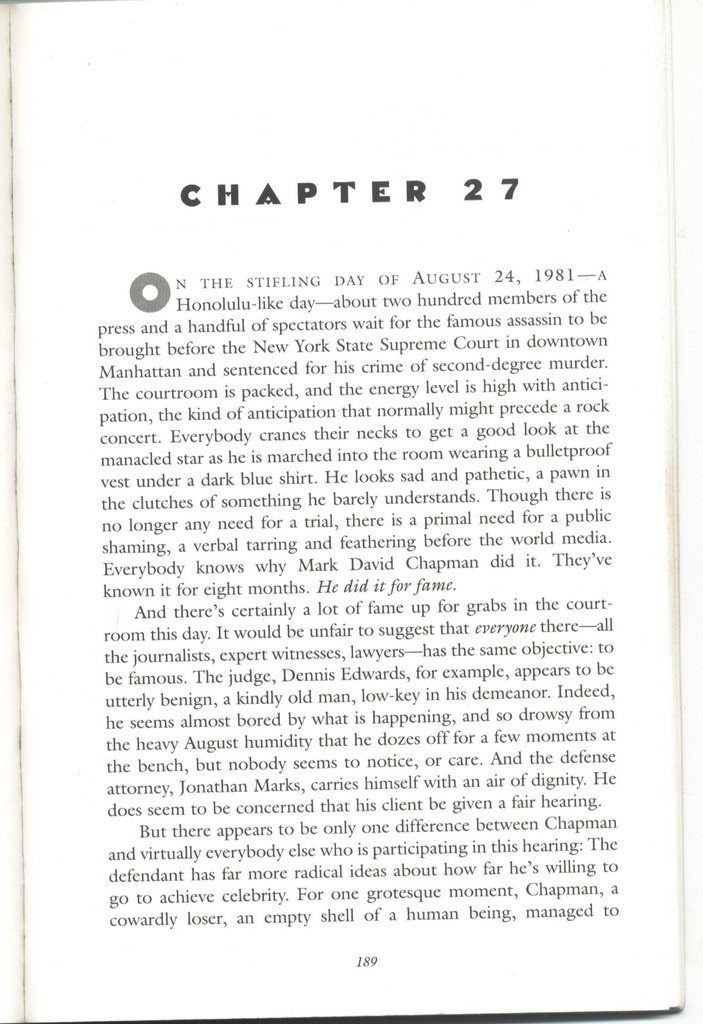
I just had to look, cause I wrote the book: The opening page of Nowhere Man’s “Chapter 27,” originally published in 2000.

***

Now that Chapter 27, starring Jared Leto as Mark David Chapman, and Lindsay Lohan as Jude, a Lennon groupie (and Chapman’s girlfriend), is set to make its world premiere at the Sundance Film Festival in January, I’ll take this opportunity to address a question that many readers of this blog have been asking: Why, at this late date, have the film’s producers, Peace Arch Entertainment, not yet acknowledged that the title of their movie was inspired by “Chapter 27” in my John Lennon bio, Nowhere Man?

Since Peace Arch, a Toronto-based company, has thus far been unwilling to provide an answer, I can only conclude that they’ve picked up through their L.A. office a touch of a parasitic virus that’s reached epidemic proportions in the area. The most common symptom of this “Hollywood Flu”: The infected corporation or individual acts as if it’s their birthright to incorporate into any film project whatever material they want without acknowledging its source, especially if the source is in no position to wage a costly and difficult legal battle—which means just about anybody who doesn’t have the financial resources of, say, Yoko Ono. In the most virulent cases, entire plots, characters, ideas, and screenplays are ripped off wholesale.

Perhaps the most notorious known outbreak of Hollywood Flu occurred in 1988, when Paramount studios helped themselves to columnist Art Buchwald’s script idea, and turned it into the Eddie Murphy vehicle Coming to America. So blatant and obvious was this unauthorized “borrowing” that Buchwald was able to sue Paramount, and receive a settlement reported to be over $1 million.

Compared to this, Peace Arch expropriating my title barely registers as a minor felony—and one that I couldn’t take legal action against even if I wanted to, as titles can’t be copyrighted. But it’s not the title itself that I feel I should be credited for. My contention has always been that if not for “Chapter 27” in Nowhere Man—which remains the only book that explains the numerological significance of 27, and shows how it karmically connects Mark David Chapman to John Ono Lennon—this film would not be called Chapter 27.

I believe I should be credited for my extensive research and reporting, which gives the title a spooky meaning and resonance that goes far beyond a 26-year-old madman’s inscrutable reference—uttered moments before a judge sentenced him to spend the rest of his life in prison—to writing the missing chapter of The Catcher in the Rye in Lennon’s blood.

“I feel like a bloodied prizefighter in the 27th round,” Chapman told a hushed courtroom, after reading from The Catcher in the Rye, and offering J.D. Salinger’s words as his confession, his final statement to the world.

Should media scrutiny of the connection between Chapter 27 and Nowhere Man ever reach the point that Peace Arch or their oddly anonymous screenwriter and director, Jarrett Schaeffer, are forced to respond to any questions about the source of their title, I assume they’ll say that they’ve never heard of Nowhere Man. The most charitable interpretation of such a claim, however, is that Schaeffer had failed to do some very basic research about the subject of his movie. And it’s worth noting that since I began keeping this blog a year ago, in response to the first flurry of Chapter 27 publicity, the inherent truth of my contention that the film’s title was inspired by Nowhere Man remains unchallenged—because it’s self-evident to anybody who’s read the book.

Strangely enough, the only thing I’ve had to defend here is my contention that Peace Arch should be allowed to make, and profit, from Chapter 27, and that rather than boycott the film (and help the producers make even more money), people who feel the need to publicly express an opinion about it should see it first.

I’d also like to answer another question, which I’m sure many of my readers have been wondering about: Who, besides Yoko Ono’s attorneys and people affiliated with Chapter 27, is reading this blog?

I keep my endlessly entertaining site meter set on “private” because I prefer (for obvious reasons) not to share any information that a corporation might use to put together, or refine, a precision-targeted online marketing campaign. But I will say this much about my readers: Though modest by the success-is-a-million-hits-a-day-standards of the Internet, the number of people who log on here is surprisingly large for a blogger who posts about once a month on a blog dedicated solely to the uncredited connection between a book with a cult following and a movie that hasn’t been released yet.

These people comprise the core audience for Chapter 27, as well as those who feel most fanatical about boycotting it. They’re the ones who want to know every scrap of information about the movie and the people who made it. They’re the ones who are going to line up to see it (or picket it) at a theatre on the all-important opening weekend, rather than wait for it to be released on DVD. A vast majority of these people—who include a number of professional journalists and writers, and at least one radio talk-show host—are either bloggers themselves, or active, if not compulsive, Internet posters, particularly on sites like MySpace, IMDB, Amazon, Wikipedia, and a variety of bulletin boards.

Looking at last 100 visitors on the site meter’s world map feature, I can also report that the eastern half of the United States is saturated with readers at this moment (as it usually is), and that there are a few hits, like distant constellations, scattered in places like Australia, Peru, and England. As for the precise location of my most regular visitors, let me put it this way: Qué pasa, New York? Wassup, Mexico City? Buenos días, London! Cheers, Santiago! Qué tal, Toronto? Good morning, Buenos Aires! Te amamos, Chicago! How’s it going, Madrid? Muchas gracias, Mountain View! Hola, Helsinki! Hello, Ohio! Hasta la vista, Ft. Worth! Abrazos y besos, L.A.—and get well soon! (Can I interest anybody at Peace Arch in buying some precision-targeted advertising space?)

It’s also not terribly surprising that the two most popular individual postings on this blog are “John Lennon’s Bible and the Occult Significance of 27” and “27: The Unluckiest Number in Rock n’ Roll.” More than 30 percent (though I’d have preferred to say 27 percent) of my readers—including virtually every one of the approximately 400 visitors I’ve gotten from India—arrive on one page or the other courtesy of Google searches on numerology, usually having to do with the number 27.

I say it’s not surprising because readers have been telling me for years that their favorite chapter in Nowhere Man is “The Book of Numbers,” which explains Lennon’s obsession with numerology and Cheiro. Apparently, people all over the world share with Lennon a fascination with the occult in general and numerology in particular, and this, in part, is responsible for keeping Nowhere Man in the public eye for seven years.

I can only wonder if Peace Arch will harness the energy of this global fascination to market Chapter 27—and if they do, I can only wonder if they will at last acknowledge the source of their very curious title.

***

Happy holidays and thanks to everybody for reading!

Saturday, November 18, 2006

The Karma (and Dogma) of December 8

John Lennon statue in El Parque de los Rockeros, Havana, Cuba. © 2006 Victoria Looseleaf

***

Why is this day, December 8, the 342nd (3+4+2=9) day of the year, different from all other days? Because on this day, strange energies (or karma, as John Lennon would have called it) seep through a small tear in the fabric of the universe, upsetting the established order of human activity. Things happen on December 8 that don’t normally happen; people who veritably ooze powerful and/or twisted vibrations leave, or come into the world. It’s not only the day of the Immaculate Conception—according to Catholic dogma, the Virgin Mary became miraculously pregnant with Jesus Christ, cleansing us all of original sin—but Jim Morrison, founder of the Doors who died in 1971 at age 27, was born (as were Greg Allman, now 59, Ann Coulter, 45, and Sinéad O’Connor, 40).

And, of course, 26 years ago, on December 8, 1980, John Lennon was assassinated in the archway of the Dakota by a deranged fan who’s now the subject of two movies, The Killing of John Lennon, which premiered at the Edinburgh International Film Festival in August, and the upcoming Chapter 27, whose title was inspired by “Chapter 27” in my Lennon bio Nowhere Man. In that book’s first chapter, “John Lennon’s Diaries,” I give my personal account of that still-reverberating night that changed so many things.

In my previous entry I wrote about my friend Louie Free, a radio talk-show host broadcasting on WASN 1500 AM out of Youngstown, Ohio, and on the Internet, Monday-Friday, 7 A.M.-Noon Eastern time. On December 8, 2000, the 20th anniversary of the murder, and a few months after the publication of Nowhere Man, I received, courtesy of Free, an especially memorable demonstration of how the transformative power of John’s sprit continues to flow through that tear in the universe—because that day it seemed to be flowing directly, and with unusual force, into Free himself, inspiring him to push the limits, just as Lennon once did.

Though I already knew that Free was not your ordinary talk-show host—our first conversation a few months earlier, a scheduled 15-minute chat, had turned into a spontaneous four-hour marathon—I wasn’t prepared for his asking me to read on the air the last chapter of Nowhere Man, the one that follows “Chapter 27.”

“I’d love to, Louie,” I said from my desk in New York, speaking on the phone, our conversation broadcast live. “But there’s words in there I can’t say on the radio.”

“Just read it,” he answered.

This is what I read:

Dakota: A Fantasy

New York City, Wednesday, January 9, 1980, 2:07 P.M.—John Lennon inhaled deeply from his joint of Thai weed, the second of the day, thick enough to be a spliff. Sitting in the “bogus position” on his bed, the quote from The National Enquirer stuck in his brain, rattling about: “If I hadn't made money honestly, I’d have been a criminal. I was just born to be rich.” And his mind reeled backwards through the years. He saw himself in Liverpool, in the Cavern Club, in 1961, leather-clad and sweating, playing to a lunchtime audience, the women shrieking, grabbing at him.

But what if fucking Brian had never walked in? What if it just never bloody happened? Imagine me stuck in Liverpool at 21, going nowhere fast, drinking meself into a fucking stupor every night. I’d be mugging bloody seamen down by the docks for a couple of extra quid. Yeah, right, some fucking genius. I’m lucky I didn’t go mad and fucking kill someone. It could have happened. But it didn’t and instead I’m doing me time in a gilded prison.

***

A few weeks later, Louie told me that one of his listeners had, indeed, informed the Federal Communications Commission that I’d said “fucking” four times on the air, and that the FCC had sent him a letter asking him to respond to the charge.

Free’s response: It was necessary for Mr. Rosen to say “fucking” four times in order for him to maintain the artistic integrity of his work.

That the FCC served any purpose other than keeping America’s airwaves safe for the homogenized “purity” of corporations like Clear Channel was news to me. So, it came as quite a shock that they accepted Free’s audacious explanation at face value and, for reasons that I may never fully understand chose not to impose a crippling fine, or to do anything but let the matter drop, and allow Louie Free to remain a vital voice in the ever-shrinking field of free-form independent radio.

This year I’ll be making my traditional December 8 appearance on “Radio Free Ohio” at 10 A.M. Eastern time. Since the final two hours of the show are now broadcast only on the Internet, Louie and I are at liberty to say or do anything we want, without fear of censorship, fines, or government interference of any kind. So please tune in. The Louie Free Show is always a good place to get a blast of instant karma. And on a day like this I’d think we can all use one.

***

Additional Program Notes

My December 8 appearance on The Louie Free Show is now archived. To listen to it, click here, then click on “Part 1” under Dec 8.

On Monday, November 20, I made an unscheduled appearance on The Louie Free Show to talk about this blog. Click here, then click on “Part 1” under Nov 20 to listen to the show. (It’s about three quarters of the way into the show.)

On Thursday, November 30, at 3:30 P.M. Eastern time, The Looseleaf Report, an L.A.-based cable TV show, will rerun their interview with me, originally recorded in February 2003. In New York City the show will be broadcast on Time Warner Cable, channel 56, and streamed on the Internet. To watch it online, click here, and then click on TW 56 / RCN 84. (Windows Media Player is required.)

***

Para mis lectores que hablan español, aquí es el capítulo:

El Dakota: Una Fantasía

Ciudad de Nueva York, miércoles 9 de enero de 1980, 2:07 p.m. John Lennon inhaló profundamente de su pitillo de mota tailandesa, el segundo del día, lo suficientemente grueso para su un churro. Sentando en la “posición espuria” en su cama, la cita del National Enquirer golpea su cerebro vivamente: “Si yo no hubiera hecho dinero honestamente, hubiera sido un criminal. Yo nací justamente para ser rico.” Y su mente vuela hacia atrás, a través de los años. Se ve en Liverpool, en el Club La Caverna, en 1961, vestido de cuero y sudando, tocando para una audiencia a la hora del almuerzo, el chillido de las mujeres enloquecidas con él.

¿Pero qué si el maldito Brian nunca hubiera entrado? ¿Qué si esto nunca hubiera sucedido? Me imagino estancado en Liverpool a los 21, bebiendo como un cosaco en un jodido estupor cada noche. Sería un maldito marinero gruñón, que baja por los muelles por un par de libras extras. Sí, claro, algún genio de mierda. Soy afortunado porque no me volví loco y no maté a alguien. Esto podría haber sucedido. Pero no sucedió, y en lugar de eso estoy pasando mi tiempo en una prisión dorada.

English version from Nowhere Man: The Final Days of John Lennon
Quick American Archives, 2002
© 2000, 2002 Robert Rosen

Versión español desde Nowhere Man: Los Últimos Días de John Lennon © 2003, Robert Rosen.
© 2003, de la traducción, Rene Portas
© 2003, Groupo Editorial Random House Mondadori, S.L.
Barcelona, España
© 2003, Editorial Grijalbo, S.A. de C.V.
México, D.F.

Thursday, October 05, 2006

October 9: Time Out for Peace

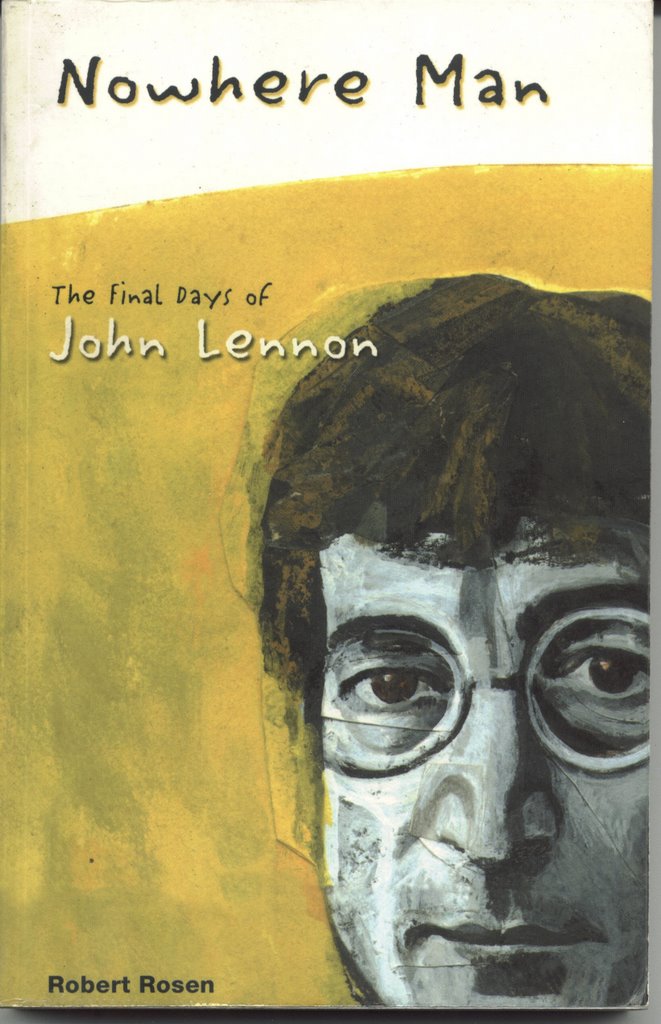
Detail from Nowhere Man cover, Random House Mondadori, 2003. John Lennon, May 26, 1967. © Hulton Deutsch Collection/Corbis

***

I just wanted to remind anybody who’s reading this blog that October 9 is John Lennon’s birthday, and that he would have been 66 had he lived. Last year, on October 9, I was in Mexico City, speaking out for peace as I believe Lennon would have, telling the media that Lennon’s birthday should be recognized as an international day of peace, and that everybody had to do whatever they could to overcome language barriers and distance barriers to communicate with each other and to work together. Because if we didn’t, then something unimaginably cataclysmic was going to happen.

Also, using a phrase that should be included in every tourist guide, I told the “men of the press,” en español: George Bush no es Estados Unidos; Estados Unidos no es George Bush. Please click here if you’d like to read this story in La Jornada—a newspaper that should be commended for recently printing on its front page a blunt truth that no American newspaper I’ve seen has expressed as clearly: “U.S. Legalizes Torture for All Foreign Enemies.”

This October 9, as I seem to do every October 9 that I’m in New York, I’ll probably go on the Louie Free Radio Show, broadcasting on WASN 1500 AM out of Youngstown, Ohio, and on the Internet, Monday-Friday, 7 A.M.-Noon Eastern time. “Radio Free Ohio,” as I call the show, is my home away from home. Usually Louie and I talk about Lennon, the Beatles, and Nowhere Man, but we also talk about politics, and a couple of weeks after 9/11, he even broadcast my wedding, live from the Municipal Building in downtown Manhattan, a few blocks from Ground Zero. It was, he said, an affirmation of life in the midst of horror and mass death. Though I’ve never met him face to face, I consider Louie Free my friend and my brother. Like John Lennon, he’s a man of peace, a courageous independent voice speaking out in a vast wasteland of talk radio.

I urge you all to listen to his show, even when I’m not on it—if only because Louie also plays some very good music.

Tuesday, September 05, 2006

Letters to Chapter 27


In addition to the comments readers post on this blog, I also receive numerous e-mails, generally of a longer and more complex nature. I always treat them as private correspondences. Recently, however, a reader granted me permission to post the letter that appears below. The writer has obviously put a great deal of thought into Chapter 27—perhaps more than I have—and has come up with a number of compelling, yet highly speculative, ideas about the film. The letter, of course, expresses opinions that are not necessarily my own.

In keeping with my policy of free speech for all, I will continue (when given permission) to post reader letters in this fashion, even if I differ with what they have to say. I would even, should the opportunity arise, post a letter from Yoko Ono’s spokesman Elliot Mintz, whom I suspect will disagree with some of the points raised in this critique.

***

McLennon Happy Meal

My name’s David, I’m a Lennon fan and an actor from London. In the 1970’s, a few friends of mine met Mark Chapman in the West End. He was hanging out at stage doors collecting autographs. One actor I know even has a photo Chapman sent him of the two of them together outside the show he’d just performed in. I’ve seen the photo—very unnerving.

I’m writing to say that I find your blog fascinating and that I’ve read Nowhere Man, too. The book gives you a real feel for John—an artist who changed so many things in the world, or at least showed us how we could effect change. Thank you for writing it and for seeing it through to publication. It seems to have cost you quite a lot.

As for Chapter 27, I think the film will be a complete failure, at least for people who want a true examination of Lennon, the murderer, and the murder itself. Since J.D. Salinger has not given permission, there will be no Catcher in the Rye voice-overs, which I think are integral to the plot. And since Yoko Ono has not given permission, there will be no Lennon music, either.

The movie seems to be primarily drawing on an incomplete psychological profile of Chapman borrowed from Let Me Take You Down, the book by that Jack Jones chap, who visited him inside Attica. Chapman, as you may have noticed, has a knack for PR, and like an old rock star, he talks about himself in the third person—which Jones dutifully repeats. To get an accurate picture of Chapman’s state of mind, surely you’d have to talk to his wife and his family, which Jones didn’t do.

But the worst problem, I think, is using Jude as a link between Chapman and Lennon. She’s just a marketing device to give the film a romantic subplot—a way to use this hot new young thing, Lindsay Lohan, to put some bums in the seats. This is grossly unfair to the real Jude, and quite simply incorrect historically.

A better solution would be to build on the truth: Use Paul Goresh as the link. He’s the amateur photographer who took the picture of Lennon signing Chapman’s Double Fantasy album. Both Goresh and Chapman were fans who became stalkers. I realize Goresh, a fat guy from New Jersey, isn’t sexy. But an actor like Philip Seymour Hoffman would be perfect for the role. The result would be a movie with more depth and character analysis that might teach us something about celebrity culture and obsession.

I know there’s artistic license, but the filmmakers also have to take some responsibility to at least tell the general facts that are known to be accurate. And if Lohan did meet Ono, and if Ono gave Lohan her blessing to do the film, then I think Yoko’s got final cut on a few sensitive areas that the movie may touch upon—like security.

Yoko, apparently, had scheduled a meeting for December 9 to talk about security. Her security chief, Doug MacDougall, had warned her the previous month that because they were now back in the public eye, they were running huge risks. But Ono either ignored his advice, or thought it wasn’t a problem.

John himself had said in BBC interviews, conducted on December 5 and 6, two days before the murder, how wonderful it was to walk around the city unmolested. Naively, he didn’t recognize that the situation had changed. Lennon, believing he was “of the people,” saw no point in security. He figured that it wouldn’t make a difference. First they shoot the bodyguards, he said, then they shoot the guy they’re protecting.

Most people probably don’t even know about the security situation, and if it’s shown in the movie, Yoko might be subjected to a huge backlash. Maybe the film will show that there was no way to stop Chapman, even with a team of bodyguards. (Personally, I think Chapman couldn’t have been stopped, and I believe Yoko is not to blame.) So, maybe Ono did ask that security issues not be discussed in the movie. Who can blame her?

Yet, the question remains: How much say does Ono have in the movie as a whole? As you well know, she’s notorious for shutting down (or attempting to shut down) “unauthorized” projects that have anything to do with John. (I’m sure the Chapter 27 producers read in Nowhere Man that it took you nearly 20 years to publish the book—they must have shat themselves.) All I’m saying is don’t perpetuate a myth that has little basis in reality. Your book shows John as a human being, with frailties. We respect, understand, and warm to him even more because of those weaknesses, and because he was able to achieve so much with all his insecurities. As the man said, “Gimme some truth.”

The problem that the filmmakers are facing is that without full permission on the various rights involved, they can only go the way of conspiracy theories, unsubstantiated rumors, and nonexistent romantic subplots, such as making Jude a major character. All this plays directly into Yoko’s hands, again allowing her to drip-feed us what she wants every few years, so we get only a taste of the man, and then it’s gone again. Sorry, but it’s crap, the way Yoko trots out this repackaged stuff, and the way her spokesman, Elliot Mintz—a man whom Lennon, as you know, had little time for—belches forth the cartoon peace and love and househusband stuff. We end with another McLennon happy meal, processed garbage for the masses.

There is enough real evidence available to comprehensively examine this terrible act and the protagonists without making shit up. Writer/director Andrew Piddington has apparently done this in his recently released The Killing of John Lennon. And, of course, you’ve done it in Nowhere Man—which is a great piece of work because it contains a lot of information that isn’t public knowledge. It’s a creative, evocative examination of Lennon, and more importantly, it’s inspired from a direct source. And you managed to do it even though Yoko made it as difficult as possible for you by not returning your journals for 18 years.

But people will go to see Chapter 27. I think it’ll be huge—if Yoko likes it. If she doesn’t, then her press machine will say it’s making money off a murdered family man and hero. And it’ll be buried. Let’s hope she doesn’t like it, and people (like you) will continue to dig out the truth and say, “This is the life of the real man.”

Cheers,
David

Sunday, August 20, 2006

25 Years Ago: Chapman Sentenced to 20 Years to Life

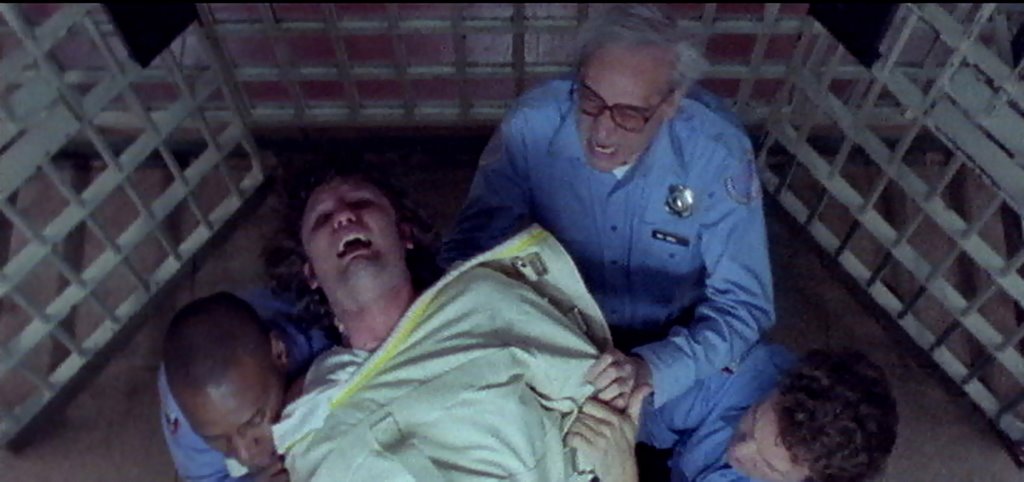
A scene from The Killing of John Lennon: the ex-Beatle’s body is taken to the morgue moments after he dies from gunshot wounds.

***

Twenty-five years ago, on August 24, 1981, in a New York City courtroom, Judge Dennis Edwards asked Mark David Chapman if he had anything to say before he was sentenced for the murder of John Lennon. Chapman, who’d pleaded guilty to the crime (thereby avoiding a trial), chose to read a passage from J.D. Salinger’s The Catcher in the Rye, the book that he said inspired him to kill Lennon.

“Anyway, I keep picturing all these little kids playing some game in this big field of rye and all,” said Chapman, reading from the book, his faltering voice growing stronger and more confident with each word. “Thousands of little kids and nobody around—nobody big, I mean—except me. And, I’m standing on the edge of some scary cliff. What I have to do, I have to catch everybody if they start to go over the cliff—I mean if they’re running and they don’t look where they’re going I have to come out from somewhere and catch them. That’s all I’d do all day. I’d just be the catcher in the rye and all.”

This was Chapman’s message and confession. He was the Catcher in the Rye for his generation; he’d murdered John Lennon to save the little children.

Chapman then told the hushed courtroom, “I feel like a bloodied prizefighter in the 27th round.” These were the exact words he’d said to a psychiatrist in Hawaii after his suicide attempt. But nobody knew what he was talking about. They understood neither the significance of 27, the triple 9, nor the significance of Chapter 27, the missing chapter of The Catcher in the Rye, Chapman’s chapter written in Lennon’s blood. They were just the meaningless words of a madman, signifying nothing.

The judge then sentenced Chapman to 20 years to life in Attica prison, and the murderer was taken away in manacles. He walked fearlessly out of the courtroom, holding his head high, veritably glowing with pride. He’d done what he came to do—become the world’s most famous antihero.

This is, in part, how I described the courtroom scene in “Chapter 27” of my John Lennon biography Nowhere Man. I don’t know yet how the scene will be depicted in Andrew Piddington’s new film, The Killing of John Lennon, which premiered recently at the Edinburgh International Film Festival. (The film is unavailable in the United States at this time.)

But an accurate recreation of Chapman’s sentencing will presumably be in the movie—because it was Piddington’s goal to put onscreen an unflinching presentation of the truth, as seen through Chapman’s eyes, as he goes from his dead-end job as a security guard in Hawaii to the aftermath of the murder and his solitary confinement in Attica. All dialogue and voiceovers are based on the assassin’s journals, statements he made to the police and psychiatrists, interviews, depositions, and court transcripts.

Judging by press reports from Edinburgh, Piddington seems to have indeed created an uncompromising work of art and achieved a high degree of cinematic verisimilitude. The film has been described as documentary-like. The writer/director has also said that he wants The Killing of John Lennon to generate “controversy, adverse criticism and scorn.”

He can count on it. With scenes like the one in the picture above, showing the ex-Beatle’s body being taken to the morgue moments after he died from gunshot wounds, Piddington will have more than his share of controversy—primarily because a small but vocal army of self-appointed censors feel that Lennon’s killer is an unfit subject to explore in a film. Any movie about Chapman, they say, will give him the fame he wanted.

These censors, of course, have been in an uproar since they learned late last year that Chapter 27, starring Jared Leto as Chapman and Lindsay Lohan as a Lennon fan he befriends a few days before the murder, was in production. Well, now the censors don’t have to wait for the release of Chapter 27; the movie they’re dying to boycott is here now. (I can already hear the tap-tap-tap of a thousand hammers pounding nails into picket signs.)

The Killing of John Lennon, which has been in production for three years, and stars Jonas Ball as the murderer, seems to have snuck up on a press that has confined its Chapman biopic coverage to Leto’s gout and diet, Lohan’s asthma attacks and nightclub exploits, and Yoko Ono’s denunciation of Chapter 27, which, curiously, she also seems to be collaborating on.

The Killing of John Lennon appears to be everything Chapter 27 isn’t: truly independent, no bullshit, no stars, no interference from Ono, just the real story told as accurately as possible. It even has a straightforward title the producers made up themselves, rather than expropriating one from Nowhere Man.

Someday, I’d imagine, it’s going to make for one half of an enthusiastically picketed double feature.

Wednesday, August 16, 2006

The Killing of John Lennon

Jonas Ball as Mark David Chapman in The Killing of John Lennon.

***

The Killing of John Lennon premiered this week at Edinburgh International Film Festival. Written and directed by Andrew Piddington, and shot over the past three years, in Hawaii, Decatur, Georgia, and New York, the movie is described as a meditation on the relationship between celebrities and their public, as well as a look into the mind of Lennon’s killer. Shot on a $500,000 budget, and starring Jonas Ball as Mark David Chapman, the film takes Chapman from his dead-end job as a security guard in Hawaii to the aftermath of the murder, with the assassin in solitary confinement in Attica prison.

“I wanted the film to be controversial,” says Piddington, who has directed two other features, Shuttlecock (1991) and The Fall (1999). “I wanted it hard, realistic, and unflinching in its presentation of the truth.”

Unlike Chapter 27, The Killing of John Lennon takes no fictional liberties. According to the director, nothing was made up and there are no invented characters. All of Chapman’s dialogue is based on his journals and statements he made to the police and psychiatrists. All of the voiceovers are based on interviews, depositions, and court transcripts.

The murder itself is presented realistically, Piddington says. “We see Lennon being shot. We see blood exploding from his body. We see Lennon’s last gasping breath as he hits the tiled floor. We hear the crunch of his bones as he’s being lifted and carried to the cop car.”

In a deliberate nod to Taxi Driver, the final image is Chapman standing naked to the waist, finger pointed to his head like a gun, just like Travis Bickle.

No information is available at this time when the film is coming to America.

Monday, July 17, 2006

El Capítulo 27 y Chapter 27


Para celebrar ambos, que cumplo 54 años (¡5+4=9!) el ¡27! de julio (2+7=9) y el 30 aniversario del día cuando el gobierno le concedió el permiso de Residencia a John Lennon, he puesto el “El Capítulo 27” de Nowhere Man: Los Ultimos Días de John Lennon. Esta es una forma de decirle gracias a quienes compraron Nowhere Man y quienes escribieron sobre el libro, convirtiéndolo en el éxito que es en Latinoamérica y España. Y quiero agradecer especialmente a todas las personas de México y Chile, que me dieron la bienvenida a sus países dispensándome su fina hospitalidad. Gracias, muchas gracias, de todo corazón.

***

El Capítulo 27


El 24 de agosto de 1981 fue un día sofocante—un día parecido a los de Honolulú—; cerca de doscientos miembros de la prensa y un puñado de espectadores esperan a que el famoso asesino sea conducido ante la Corte Suprema del estado de Nueva York, en el centro de Manhattan, y condenado por el delito de asesinato en segundo grado. La sala de la corte está abarrotada, y el nivel de energía es anticipadamente alto, con ese habitual tipo de anticipación previo a un concierto de rock. Todos estiran sus cuellos para ver con claridad a la estrella esposada, cuando entra en la sala con un chaleco antibalas debajo de una camisa azul oscuro. Chapman luce triste y patético, una presa entre las garras de algo que apenas entiende. Aunque no haya ya ninguna necesidad de juicio, hay la necesidad primaria de la humillación pública, un linchamiento verbal ante los medios de todo el mundo. Todos saben por qué Mark David Chapman lo hizo. Lo han sabido por ocho meses. Él lo hizo por la fama.

Y hay ciertamente mucha fama en los arrebatos de la sala de la corte esa día. Sería injusto sugerir que todos allí—todos los periodistas, testigos oculares, abogados—tienen el mismo objetivo: ser famoso. El juez Dennis Edwards, por ejemplo, parece bastante benigno, un viejo amable, de conducta moderada. En verdad, parece casi aburrido con lo que sucede, y tan soñoliento bajo la pesada humedad de agosto, que dormita por unos instantes en el banco, pero nadie parece advertirlo, u ocuparse de ello. Y el abogado defensor, Johnathan Marks, se conduce con aire de dignidad. Parece estar interesado en que su cliente tenga una audiencia imparcial.

Pero parece haber sólo una diferencia entre Chapman y virtualmente todas las demás personas que participan en esta audiencia: el acusado tiene ideas mucho más radicales acerca de cuán lejos está dispuesto a llegar para alcanzar la celebridad. Por un instante grotesco, Chapman, un cobarde perdedor, una cáscara vacía como ser humano, procura dominarse, es una actuación con el coraje de sus monstruosas convicciones. Él ha hecho exactamente lo que quería hacer, se ha transformado a sí mismo en el antihéroe mundial más famoso.

Por consiguiente, el aire está caldeado por celos vengativos. La gente está furiosa con Chapman no sólo porque él mató a John Lennon, sino también porque cometió un ataque brutal contra el statu quo, un acto de lucha de clases. John Lennon era un profesional muy exitoso, un miembro de la élite de poder. Y los profesionales más exitosos de la sala de la corte toman eso personalmente. Chapman se ha robado la fama de John Lennon, y ellos no están dispuestos a que la disfrute. Pero el triste hecho es que, de todas formas, la breve fama que ellos puedan alcanzar por esos días dependerá directamente de su relación con el asesino. Yo lo psicoanalicé a él. Yo lo acusé a él. Yo escribí una historia sobre él.

Los testigos oculares se han preparado bien para su momento ante los reflectores, para esa combinación de lo personal con lo histórico. Los psiquiatras podrían ser tomados por actores que audicionan para una miniserie de TV. Si puede hallarse un defecto en su actuación, es porque son transparentes en su mayoría. Sonríen demasiado. Parecen demasiado felices, demasiado presumidos, como si no les competiera cualquier noción anticuada de justicia, sino su lugar, pensar en contratos para escribir libros.

Los psiquiatras de la fiscalía repiten lo que han estado diciendo desde diciembre: Chapman estaba cuerdo, él sabía perfectamente lo que estaba haciendo, y lo hizo por la fama. Los psiquiatras de la defensa, desde luego, hablan de su esquizofrenia, de “la gente pequeña”, de su dolor.

Aparentemente, nadie se familiariza con la intrigante declaración de Yoko Ono sobre la reencarnación: “Tu hermano es la persona que tú asesinaste en tu vida pasada”. Por tanto, nadie se ha molestado en preguntar a Chapman: ¿Usted espera ser el hermano de John Lennon en su siguiente vida?

Los fans de Lennon añaden un toque surrealista a los procesos. Muchos de ellos llevan el pelo largo, como John lo usaba en el 68. Llevan lentes con bordes de cable y playeras con la imagen de Lennon. Ellos son más que los reporteros al menos en una relación de dos a uno, y están ansiosos por compartir sus opiniones con “los hombres de la prensa”.

“Mark David Chapman—opina un fan—era sólo un cabrón cobarde que lo hizo la fama.”

“Ahora él merece morir—añade otro—. Y yo estaría feliz de bajar el enchufe.”

Allen Sullivan, el fiscal, describe a Chapman como un hombre que “nunca mostró algún verdadero remordimiento” y está “interesado sólo en sí mismo, en su propio bienestar, en lo que le afecta, lo que le importa en este preciso momento”. Entonces insiste en que Chapman “lo hizo por la fama, por la exaltación personal, para llamar la atención sobre él, para halagar a su propio ego. El acusado estaba dedicado todo el tiempo a hacerse famoso”. Su prueba: Chapman quería que el fotógrafo Paul Goresh, quien previamente había fotografiado a Lennon cuando firmó la copia del Double Fantasy para Chapman, esperara hasta que Lennon regresara de su sesión de grabación, para que pudiera hacer la foto del asesinato.

Sullivan lo hace parecer como si el deseo por la fama fuera una cosa vergonzosa, un crimen en sí mismo. Pero sus palabras suenan huecas. Es un feo espectáculo que pasa por alto intencionalmente, el único hecho horrible que flota como una niebla sobre la sala de la corte. Es un hecho que nadie se atreve a mencionar: en Estados Unidos, en 1981, particularmente en una ciudad como Nueva York, la fama es una ventaja crucial, y el anonimato es una condición tóxica que puede conducir a la rabia asesina.

Holden Caulfield o John Lennon, en cuanto a eso, se habrían vomitado.

Antes de que el juez Dennis Edwards pronuncie la sentencia, a Chapman se le concede la oportunidad de hablar. Pero es poco lo que puede hacer para ayudarse a sí mismo. Chapman ya se ha declarado culpable. La evidencia en su contra es abrumadora. Es literalmente un arma humeante. El veredicto también podría estar predestinado. Él se ha enterrado en algún lugar por el resto de su vida. Alguna vez, la única duda verdadera era si él iba a estar en una prisión o en una institución para criminals dementes. Ahora no hay duda.

Visto como un mártir con un chaleco antibalas, se pone de pie y enfrenta al juez. Tiene su “Biblia” con él—su copia muchas veces hojeadas de El guardian entre el centeno—. “Yo he escogido este pasaje como mis últimas palabras”, jura—un juramento que pronto romperá—. Abre el capítulo 22, en el que Holden, tras ser expulsado de la escula por reprobar cuatro materias, dice a su pequeña hermana, Phoebe, lo que quiere hacer con su vida.

El asesino empieza a leer. “De todos modos, yo sigo imaginando a todos esos niños pequeños jugando algo en ese gran campo de centeno y eso es todo.” Está nervioso y al principio vacila. Entonces algo le da fluidez y pone empeño, su voz de repente es fuerte y clara, regular e impecable. Él ha ensayado bien, y hace justicia a Salinger.

“Miles de niños pequeños y nadie alrededor—nadie grande, quiero decir, excepto yo—. Y estoy parado al borde de un temible precipicio. Lo que tengo que hacer es capturar a todo el que empiece a acercarse al precipicio. Me refiero a que si ellos corren y no miran a donde van, yo tengo que salir de algún lugar y capturarlos. Eso es lo que yo hago todo el día. Yo sólo soy el guardián entre el centeno, y eso es todo.”

Éste es su mensaje y confesión. Mark David Chapman es el guardián entre el centeno de su generación; él ha asesinado a John Lennon para salvar a los niños.

Entonces Chapman dice a la callada sala de la corte: “Me siento como un peleador sangriento premiado en el round 27”. Ésas son las palabras exactas que había dicho a un psiquiatra en Hawai, tras su intento de suicidio. Pero nadie sabe de qué está hablando. Tampoco entienden el significado del 27, el triple de 9, ni el significado del capítulo 27, el capítulo perdido de El guardián entre el centeno, el capítulo de Chapman escrito con la sangre de Lennon. Son sólo unas palabras insensatas de un loco, que no significan nada.

El juez entonces pronuncia la sentencia y Chapman es sacado; con las esposas sale sin miedo de la sala de la corte, llevando la cabeza en alto, realmente brillando de orgullo. Él ha hecho lo que vino a hacer.

Instantes después, afuera de la sala de la corte, los medios, con sus bolígrafos, reflectores y cámaras listas, descienden sobre los testigos oculares de la fiscalía y Sullivan, el fiscal. Ellos son el equipo ganador. Están de pie en un nudo apretado y pequeño, arreglados para los reflectores, cada uno sonriendo ampliamente, empujándose el uno al otro hacia atrás, felicitándose interiormente por el trabajo bien hecho. Lo único que se echa de menos es el champagne, que probablemente vendrá más tarde, en una fiesta privada.

“¿Se hizo justicia?”, los medios quieren saber.

Por supuesto que se hizo justicia. El asesino muy probablemente pasará el resto de su vida en la cárcel.

Entonces no les queda nada más que hacer sino irse a casa y verse en las noticias nocturnas, mirarse fotografiados en los periódicos matutinos.

Con excepción de Mark David Chapman. Él continuará la gran caída descrita en la oscura profecía del capítulo 24 de El guardian entre el centeno. El Sr. Antolini, un viejo maestro de Holden—otro “pervertido” en realidad—, le dice: “Yo pienso que esta caída que estás conduciendo es una clase especial de caída, horrible. Al hombre que cae no se le permite sentir u oírse a sí mismo cuando toca fondo. Él sólo sigue cayendo y cayendo”.

Chapman pronto descubrirá lo que hay en el fondo del abismo “sin fondo”: un confinamiento solitario en Attica, poseído por los demonios.

Imagina que no hay posesión.

“Esto me mata.” Eso es lo que Holden Caulfield hubiera dicho, de todos modos.

Desde Nowhere Man: Los Últimos Días de John Lennon © 2003, Robert Rosen.
© 2003, de la traducción, Rene Portas
© 2003, Groupo Editorial Random House Mondadori, S.L.
Barcelona, España
© 2003, Editorial Grijalbo, S.A. de C.V.
México, D.F.

***

The Translation

To celebrate both my 54th birthday (5+4=9!) on July 27 (!) and the 30th anniversary of the government granting John Lennon his green card, I’ve posted “El Capítulo 27” from Nowhere Man: Los Últimos Días de John Lennon. This is my way of saying thank you to all the Spanish-speaking people who’ve bought Nowhere Man, who’ve written about the book, and who’ve made it such a success in Latin America and Spain. And I especially want to thank all the people in Mexico and Chile who welcomed me to their countries with such graciousness and hospitality. Thank you! Thank you! Thank you!

***

Chapter 27

On the stifling day of August 24, 1981–a Honolulu-like day–about two hundred members of the press and a handful of spectators wait for the famous assassin to be brought before the New York State Supreme Court in downtown Manhattan and sentenced for his crime of second-degree murder. The courtroom is packed, and the energy level is high with anticipation, the kind of anticipation that normally might precede a rock concert. Everybody cranes their necks to get a good look at the manacled star as he is marched into the room wearing a bulletproof vest under a dark blue shirt. He looks sad and pathetic, a pawn in the clutches of something he barely understands. Though there is no longer any need for a trial, there is a primal need for a public shaming, a verbal tarring and feathering before the world media. Everybody knows why Mark David Chapman did it. They’ve known it for eight months. He did it for fame.

And there’s certainly a lot of fame up for grabs in the courtroom this day. It would be unfair to suggest that everyone there–all the journalists, expert witnesses, lawyers–has the same objective: to be famous. The judge, Dennis Edwards, for example, appears to be utterly benign, a kindly old man, low-key in his demeanor. Indeed, he seems almost bored by what is happening, and so drowsy from the heavy August humidity that he dozes off for a few moments at the bench, but nobody seems to notice, or care. And the defense attorney, Jonathan Marks, carries himself with an air of dignity. He does seem to be concerned that his client be given a fair hearing.

But there appears to be only one difference between Chapman and virtually everybody else who is participating in this hearing: The defendant has far more radical ideas about how far he’s willing to go to achieve celebrity. For one grotesque moment, Chapman, a cowardly loser, an empty shell of a human being, managed to manipulate himself into acting with the courage of his monstrous convictions. He has done exactly what he wanted to do; he has transformed himself into the world’s most famous antihero.

Consequently, the air is thick with vengeful jealousy. People are furious at Chapman not only because he killed John Lennon, but also because he committed a brutal attack on the status quo, an act of class warfare. John Lennon was a very successful professional, a member of the power elite. And the very successful professionals in this courtroom take it personally. Chapman has stolen John Lennon’s fame, and they’re not about to let him enjoy it. But the sad fact is that whatever fleeting fame they might be able to grasp this day will depend strictly upon their relationship to the killer. I psychoanalyzed him. I prosecuted him. I wrote a story about him.

The expert witnesses have prepared well for their moment in the spotlight, for this merging of the personal and historical. The psychiatrists could be mistaken for actors auditioning for a TV miniseries. If there is fault to be found in their performances, it’s that most of them are transparent. They smile too much. They look too happy, too smug, as though they aren’t concerned with any antiquated notions of justice, but are thinking instead about book deals.

The psychiatrists for the prosecution repeat what they’ve been saying since December: Chapman was sane, he knew exactly what he was doing, and he did it for fame. The defense psychiatrists, of course, talk of his schizophrenia, the “Little People,” his pain.

Apparently, nobody on either side is familiar with Yoko Ono’s intriguing statement on reincarnation: “Your brother is the person you murdered in your past life.” So nobody has bothered to ask Chapman, Do you expect to be John Lennon's brother in your next life?

The Lennon fans add a surreal touch to the proceedings. Many of them are long-haired in that “John ’68” style. They wear wire-rimmed glasses and T-shirts with Lennon’s image on it. They’re outnumbered by reporters by at least two to one, and they’re anxious to share their opinions with “the men of the press.”

“Mark David Chapman,” opines one fan, “was just a cowardly fuck who did it for fame.”

“Now he deserves to die,” adds another. “And I’d be happy to pull the switch.”

Allen Sullivan, the prosecutor, describes Chapman as a man who “has never exhibited any true remorse” and who is “only interested in himself, his own well-being, what affects him, what’s important to him at this particular moment.” He then proceeds to hammer home the point that Chapman “did it for fame, personal aggrandizement, to draw attention to himself, to massage his own ego. The defendant was concerned throughout that he become famous.” His proof: Chapman wanted photographer Paul Goresh, who’d previously photographed Lennon signing Chapman’s copy of Double Fantasy, to wait until Lennon returned from his recording session so he could get a photo of the murder.

Sullivan makes it sound as if the desire for fame is a shameful thing, a crime in itself. But his words ring hollow. It’s an ugly show that intentionally overlooks the one hideous fact that hangs like fog in the courtroom. It is the one fact that nobody dares mention: In America in 1981, particularly in a city like New York, fame is a crucial commodity, and anonymity is a toxic condition that can lead to murderous rage.

Holden Caulfield, or John Lennon for that matter, would have puked.

Before Judge Dennis Edwards passes sentence, Chapman is given the opportunity to speak. But there’s little he can do to help himself. Chapman has already pleaded guilty. The evidence against him is overwhelming. There is literally a smoking gun. The verdict may as well have been preordained. He is getting locked up somewhere for the rest of his life. Once, the only real question was if it was going to be in prison or in an institution for the criminally insane. Now there is no question.

Looking like a martyr in a bulletproof vest, he stands up and faces the judge. He has his “Bible” with him–his well-thumbed copy of The Catcher in the Rye. “I’ve chosen this passage as my final spoken words,” he vows–a vow he'll soon break. He opens to Chapter 22, in which Holden, after being thrown out of school for failing four subjects, tells his little sister, Phoebe, what he wants to do with his life.

The murderer begins reading. “Anyway, I keep picturing all these little kids playing some game in this big field of rye and all.” He’s nervous and at first he falters. Then something clicks and he hits his stride, his voice suddenly strong and clear, smooth and flawless. He is well rehearsed, and he does Salinger justice.

“Thousands of little kids and nobody around–nobody big, I mean–except me. And, I’m standing on the edge of some scary cliff. What I have to do, I have to catch everybody if they start to go over the cliff–I mean if they’re running and they don’t look where they’re going I have to come out from somewhere and catch them. That’s all I’d do all day. I’d just be the catcher in the rye and all.”

This is his message and confession. Mark David Chapman is the Catcher in the Rye for his generation; he has murdered John Lennon to save the little children.

Then Chapman tells the hushed courtroom, “I feel like a bloodied prizefighter in the 27th round.” These are the exact words he said to a psychiatrist in Hawaii after his suicide attempt. But nobody knows what he’s talking about. They understand neither the significance of 27, the triple 9, nor the significance of Chapter 27, the missing chapter of The Catcher in the Rye, Chapman’s chapter written in Lennon’s blood. They are just the meaningless words of a madman, signifying nothing.

The judge then passes sentence, and Chapman is taken away still wearing manacles. He walks fearlessly out of the courtroom, holding his head high, veritably glowing with pride. He’s done what he came to do.

Afterwards, outside the courtroom, the media, with their pens and floodlights and cameras at the ready, descend upon the expert witnesses for the prosecution, and Sullivan, the prosecutor. They are the winning team. They stand in a tight little knot, preening in the floodlights, everybody smiling broadly, patting each other on the back, congratulating themselves on a job well done. The only thing missing is champagne, which will probably come later, at the private party.

“Was justice served?” the media demands to know.

Of course justice was served. The killer will most likely spend the rest of his life in jail.

Then there is nothing for them to do but go home and watch themselves on the evening news, look at their pictures in the morning newspapers.

Except for Mark David Chapman. He will continue the great fall described in the dark prophesy in Chapter 24 of The Catcher in the Rye. Mr. Antolini, an old teacher of Holden’s–another “pervert,” actually–tells him, “This fall I think you’re riding for–it’s a special kind of fall, a horrible kind. The man falling isn’t permitted to feel or hear himself hit bottom. He just keeps falling and falling.”

Chapman will soon discover what lies at the bottom of the “bottomless” pit: solitary confinement in Attica, possession by demons.

Imagine no possession.

“That kills me.”

That’s what Holden Caulfield would have said, anyway.

From Nowhere Man: The Final Days of John Lennon
Quick American Archives, 2002
© 2000, 2002 Robert Rosen